Taiko Audio (Emile Bok) writes: “Today we are introducing the culmination of close to 4 years of research and development. As a bona fide IT/tech nerd with a passion for music I have always been intrigued by the potential of leveraging the most modern of technologies in order to create a better music playback experience.

This, amongst others, led to the creation of our popular, perhaps even revolutionary, Extreme music server 5 years ago which we have been steadily improving and updating with new technologies over the course of it’s life cycle. Today I feel we can safely claim it’s holding it’s ground against the onslaught of new server releases from other companies, and we are committed to keep improving it for years to come.
We are introducing a new server model today, called the Olympus. Hierarchically it positions itself above the Extreme. It does provide quite a different music experience then the Extreme, or any other server I’ve heard for that matter. Conventional audiophile descriptions as sound staging, dynamics, colour palette, etc, fall short to describe this difference. It does not sound digital or analog, I would be inclined to describe it as coming closer to the intended (or unintended) performance of the recording engineer.
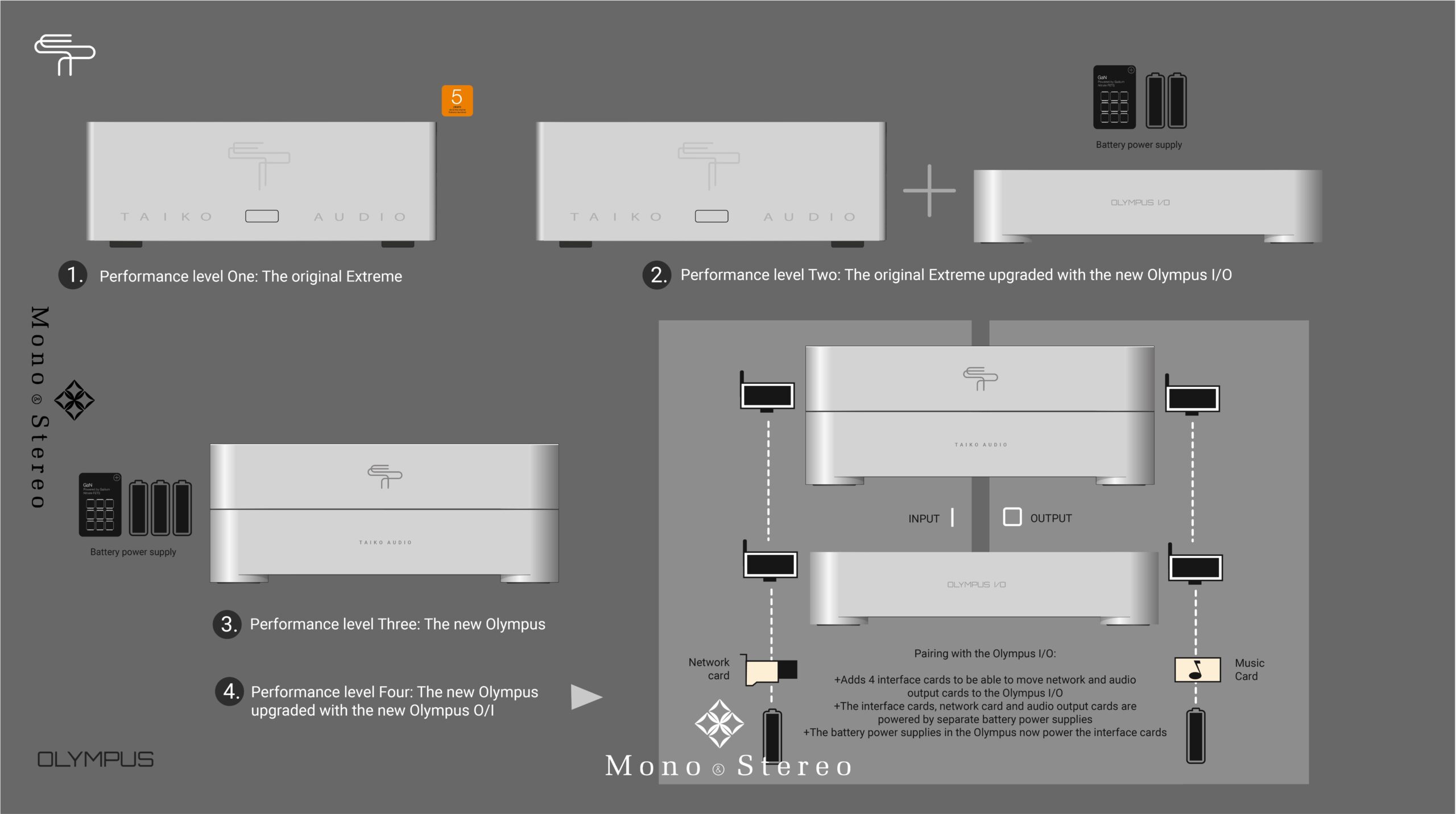
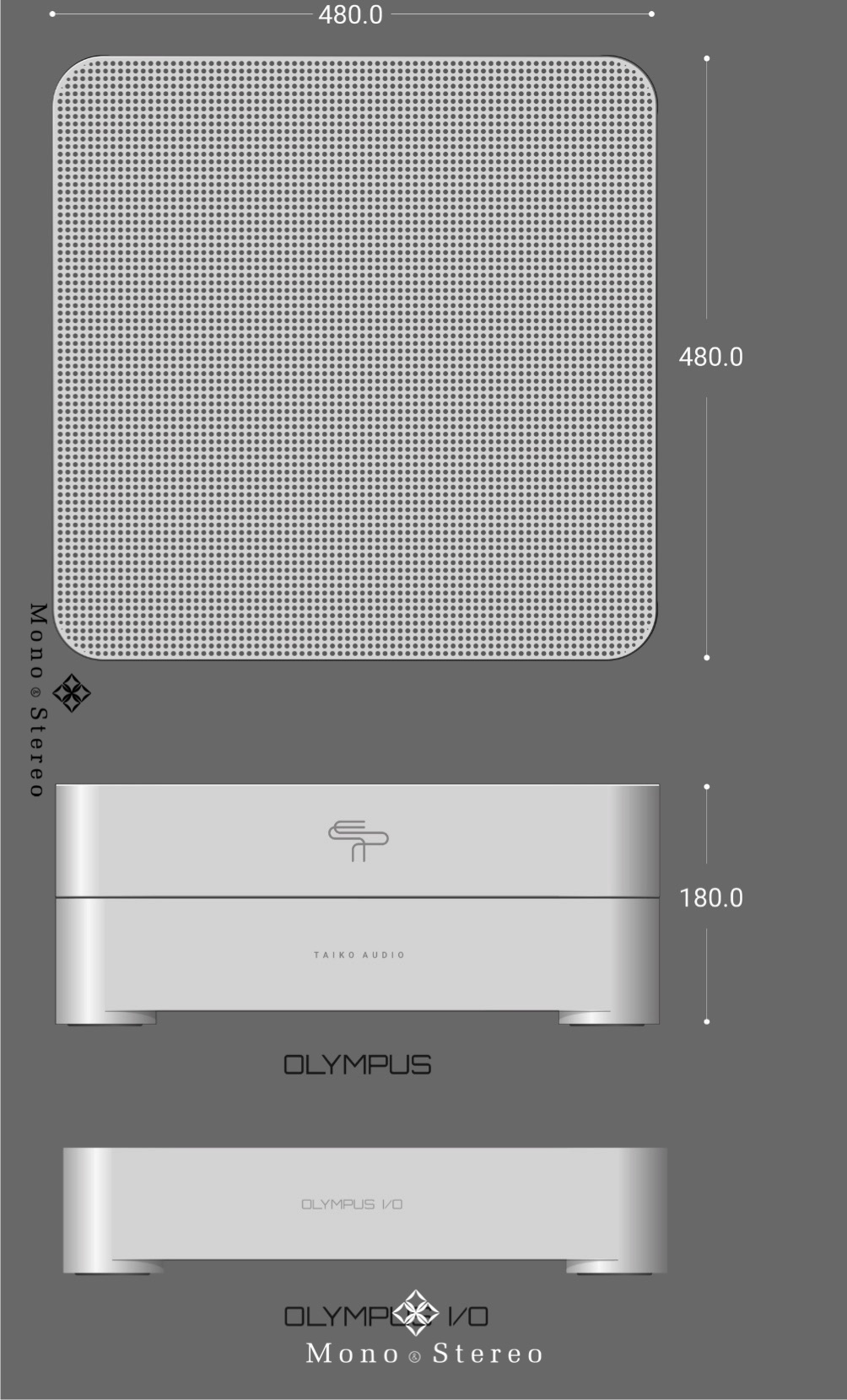
Committed as we are to keeping the Extreme as current as possible we are introducing a second product today, called the Olympus I/O. This is an external upgrade to the Extreme containing a significant part of the Olympus technology allowing it to come near, though not entirely at, Olympus performance levels. The Olympus I/O can even be added to the Olympus itself to elevate it’s performance even further, though not as dramatic an uplift as adding it to the Extreme. Consider it the proverbial “cherry on top”.
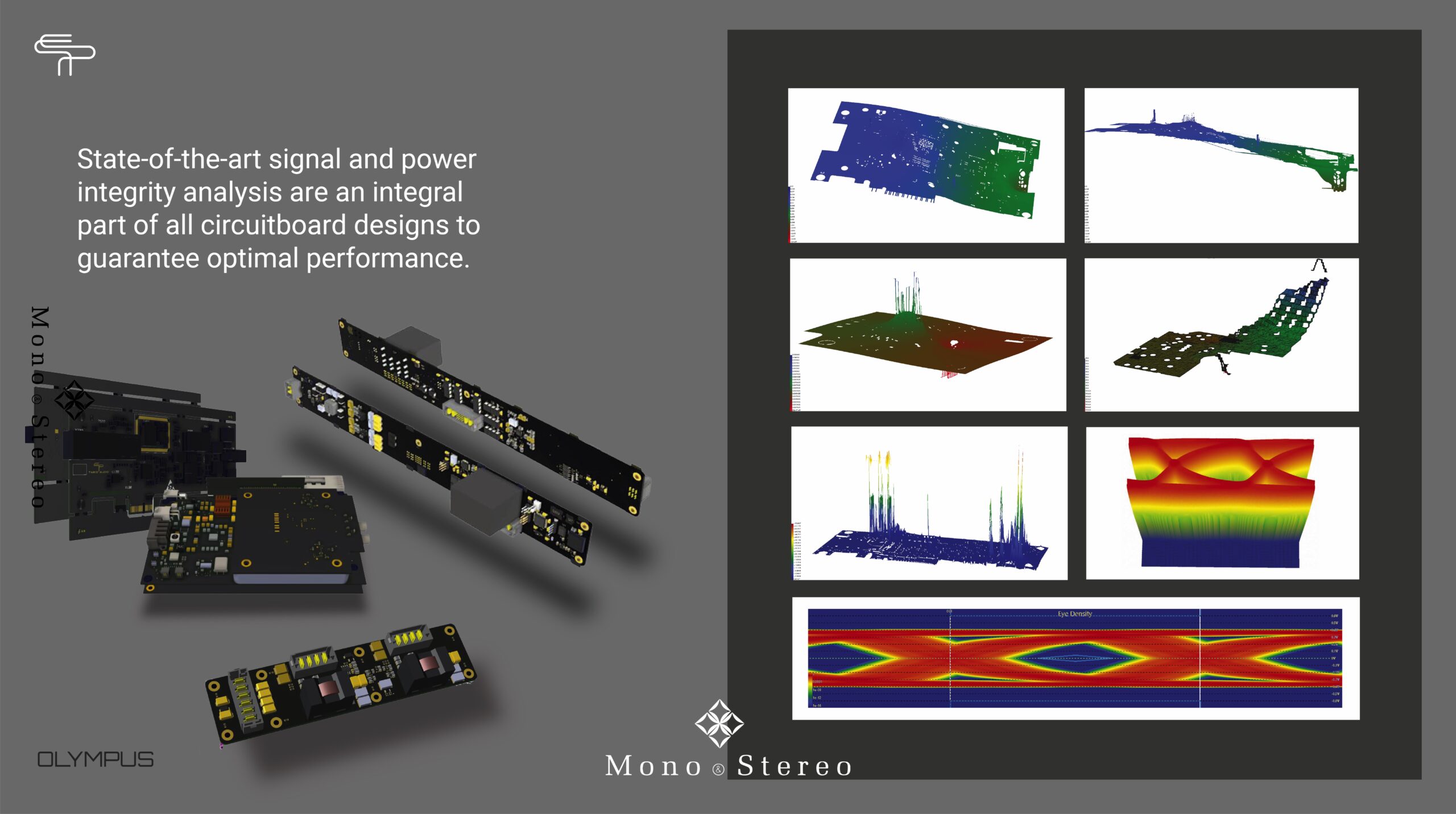
There are many technological advanced innovations in the Olympus, describing them all will take time and will make this introduction piece hard to digest, we will add bits and pieces of information over the coming days. For now I’ll just say that the best way to describe it in short is that we have eliminated a large number of intermediate processing steps and conversions, in both hardware and software, for a more direct, more streamlined, more purist “signal path”. I will post a graphical presentation in the following posts which we made in an attempt to provide an as clear as possible overview of the Olympus product series. Pricing and availability information to follow later as well.
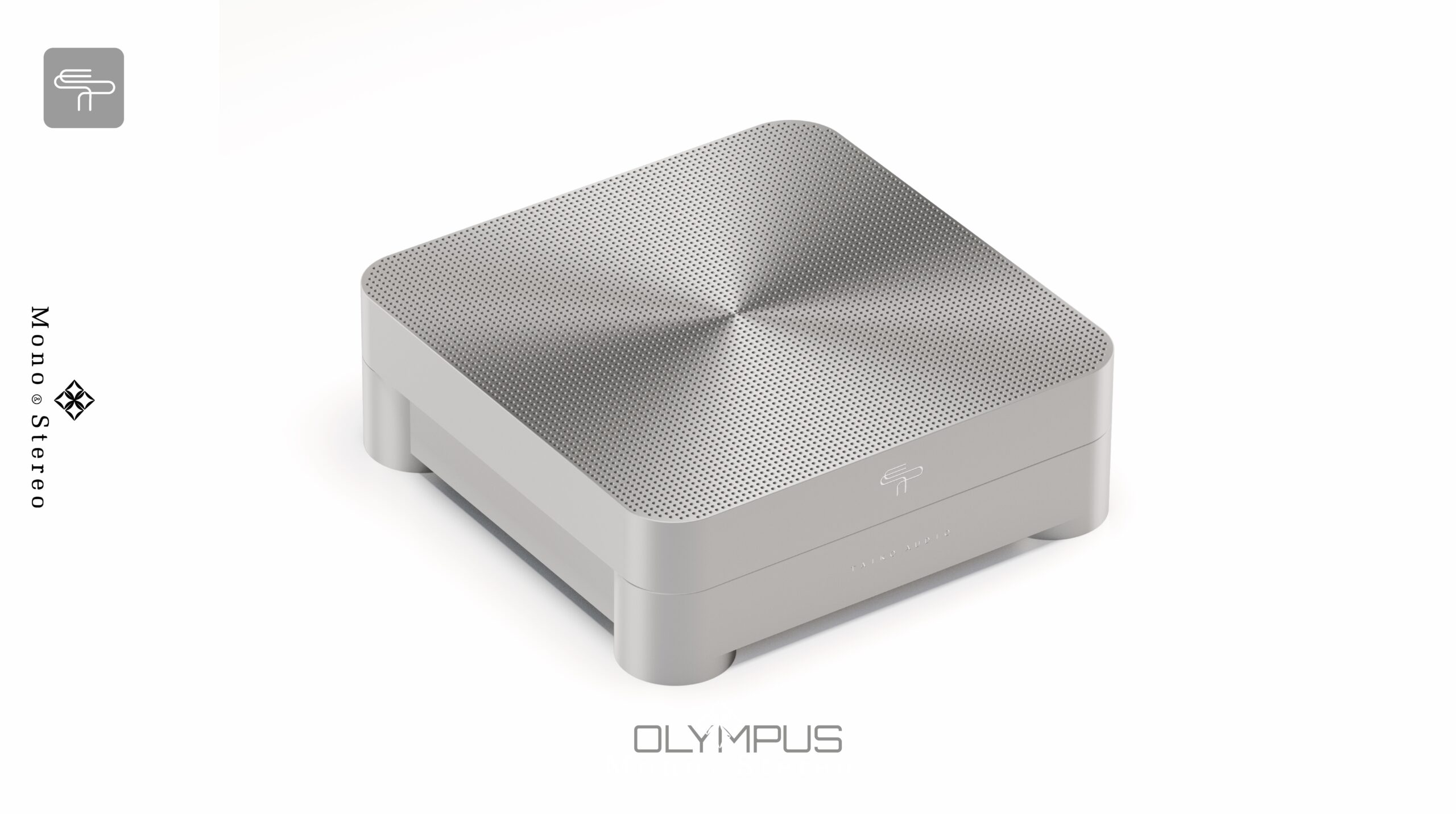
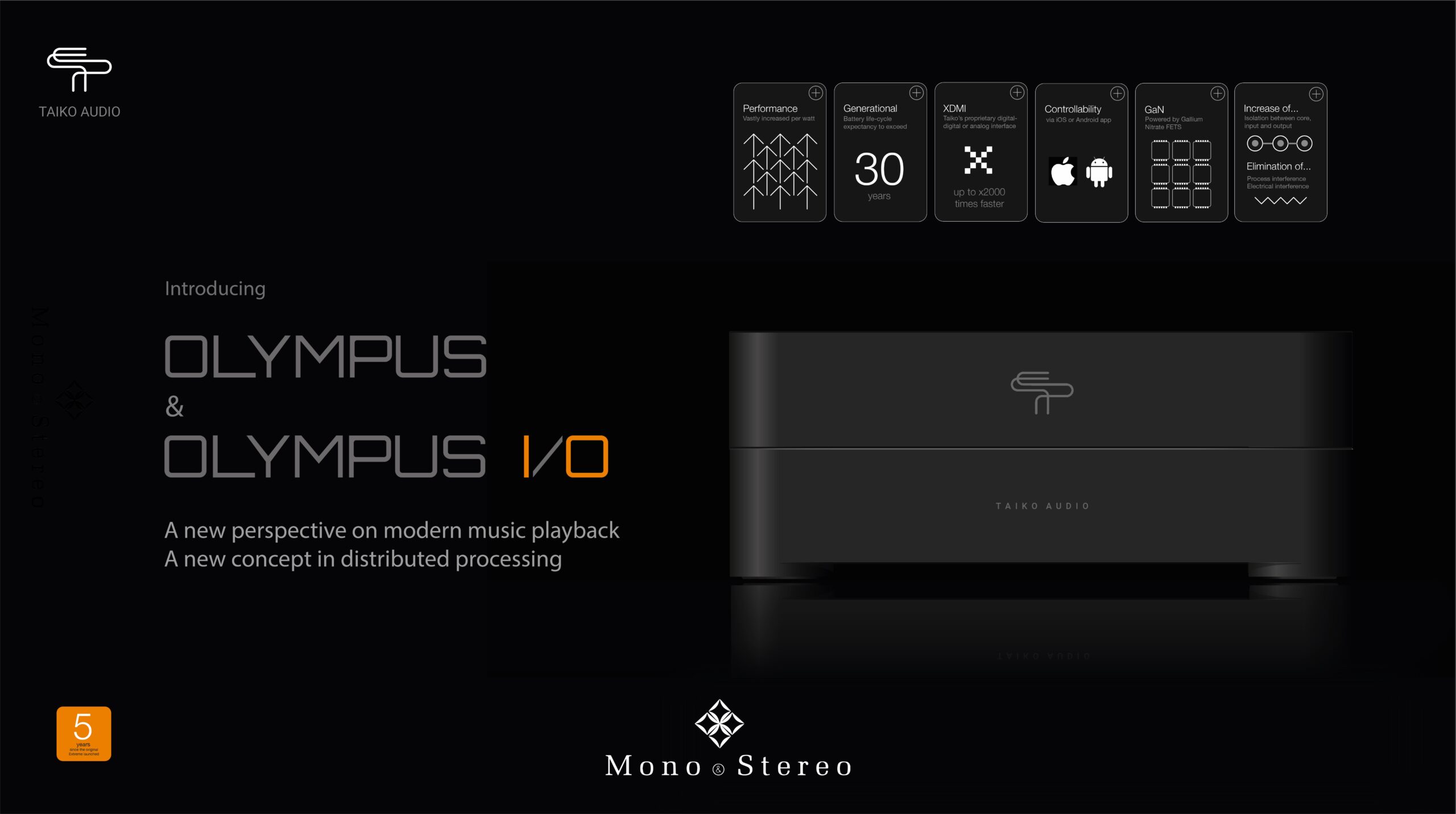
OLYMPUS – OLYMPUS I/O. A new perspective on modern music playback. A new concept in distributed processing. Increase of… Olympus eliminates processing interference and increases isolation between core (operating system and music playback software), input (network traffic handling) and output (audio streaming). Eliminates electrical interference by means of floating input and output processing peripherals on battery power supplies
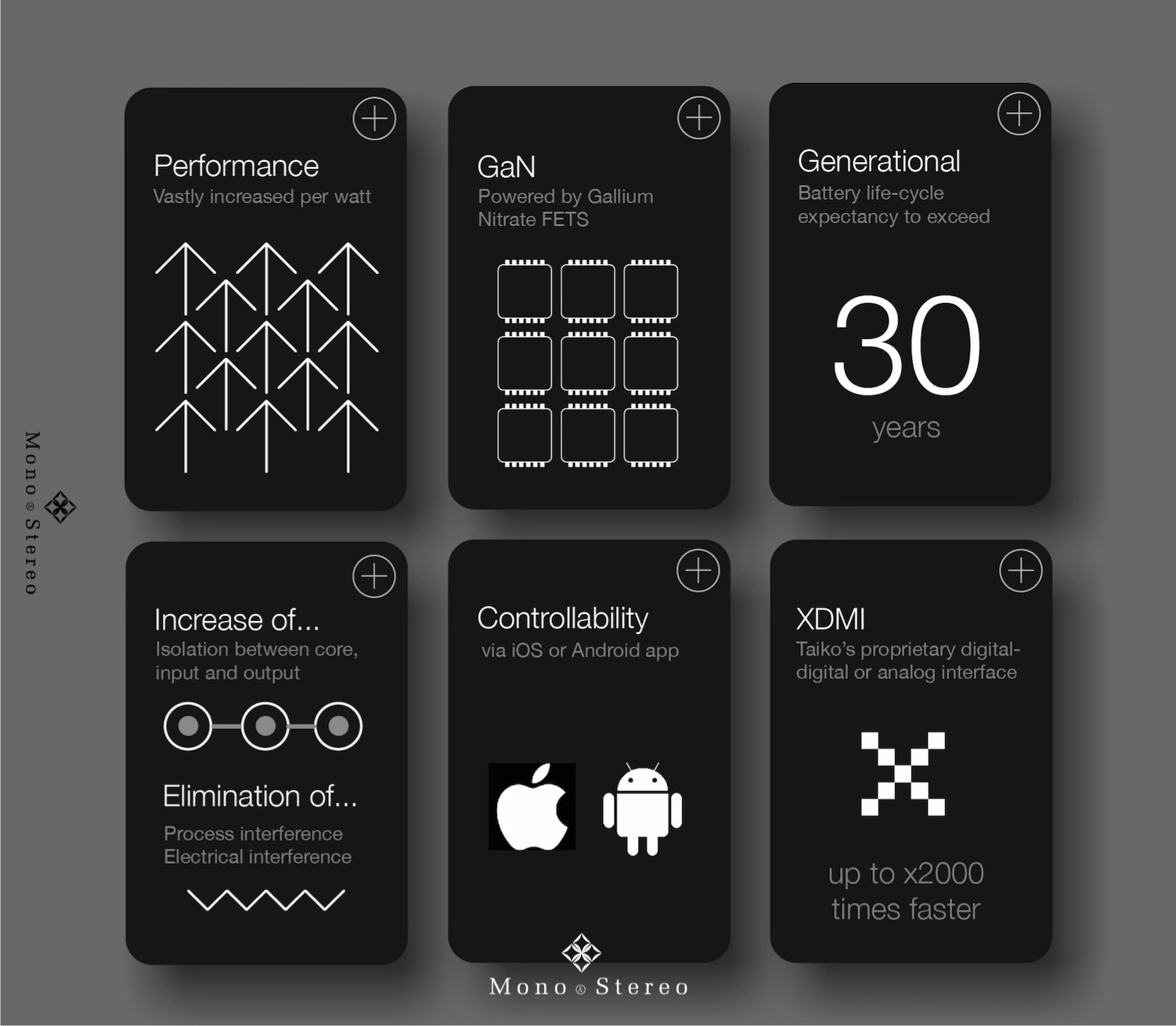
Olympus reaches new performance, power efficiency levels and durability
- Vastly increased performance per watt
- Newly designed, highly efficient, high-speed GaN (Gallium Nitrate) FET based power supplies Proprietary extreme performance battery cells, full performance life expectancy exceeds 30 years of continuous use Custom designed battery management and charging system, no electrolytic capacitors to match battery life-cycle expectancy
- Management and monitoring by iOS or Android app
- Copper/Aluminium hybrid chassis, machined from solid billet
The Olympus contains 3 battery – and 2 linear power – supplies
The Olympus 1/0 contains 2 battery – and 1 linear power – supplies
Olympus features new interface technology. XMI (Extreme Direct Music Interface), a new proprietary digital-to-digital OR analogue interface, designed from scratch to extract the maximum possible performance from CPU (music server) based music playback. XDMI combines software and hardware to directly convert CPU/cache bound music streams to a digital or analog output. Leveraging modern datacenter technology this interface reaches speeds of x250 up to x2000 times faster than current commonly used USB interfaces.
Modular design. This approach allows Olympus to be configured in a variety of ways, local or remote, and with user mountable output options. Initially shipped with both an analog RCA stereo output module and a digital AES/EBU + SPDIF module. Other options to follow.