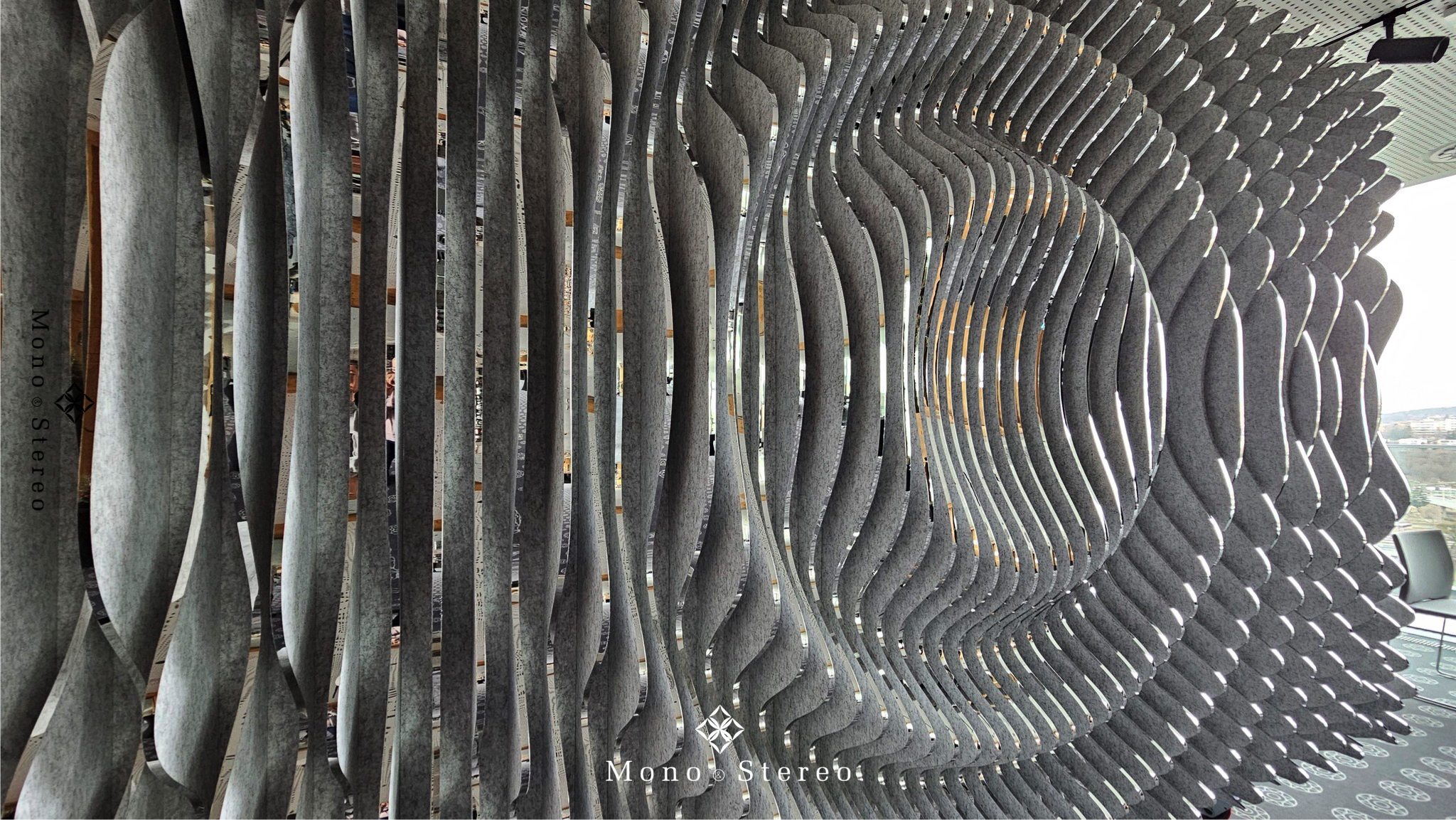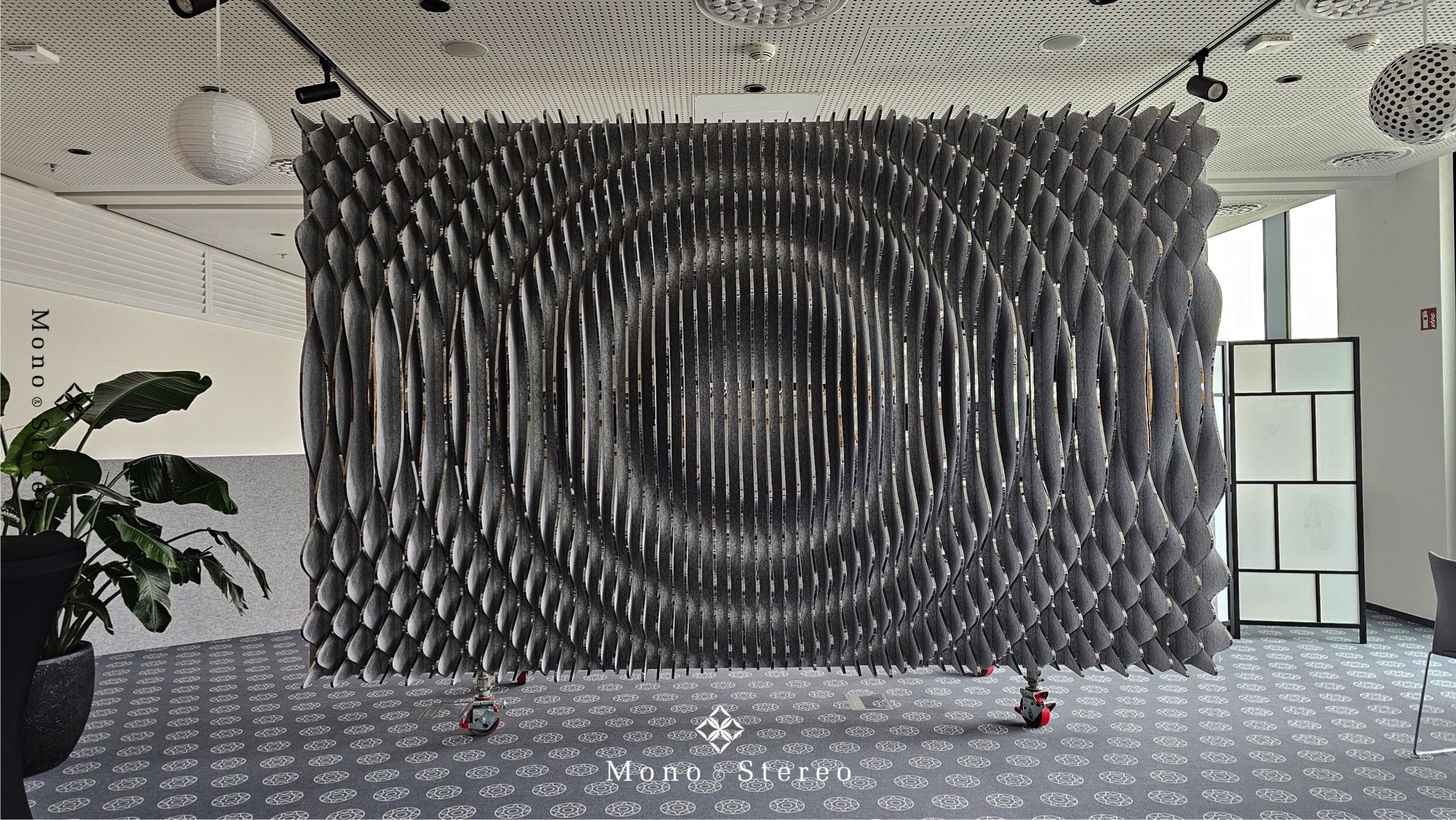
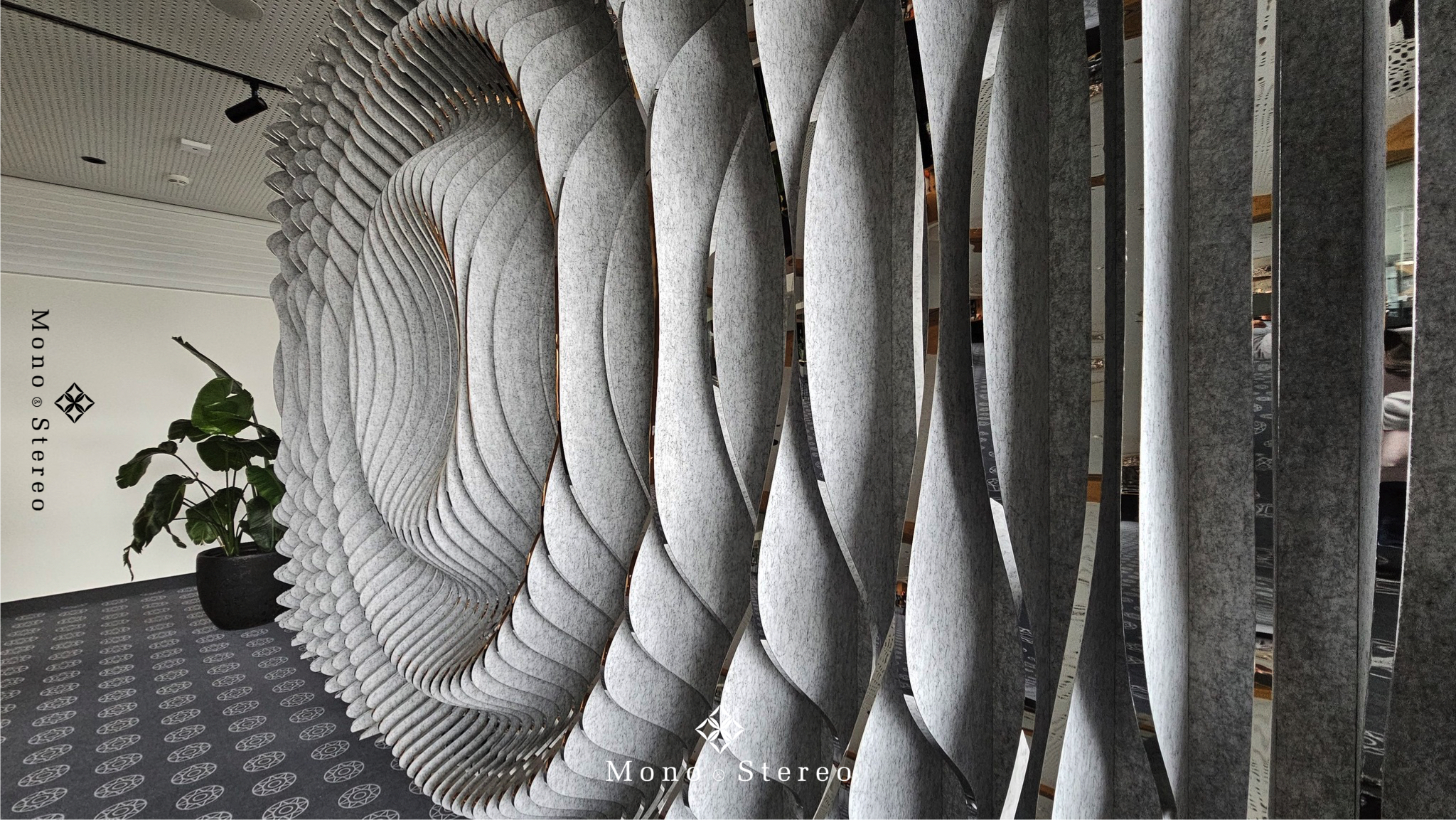
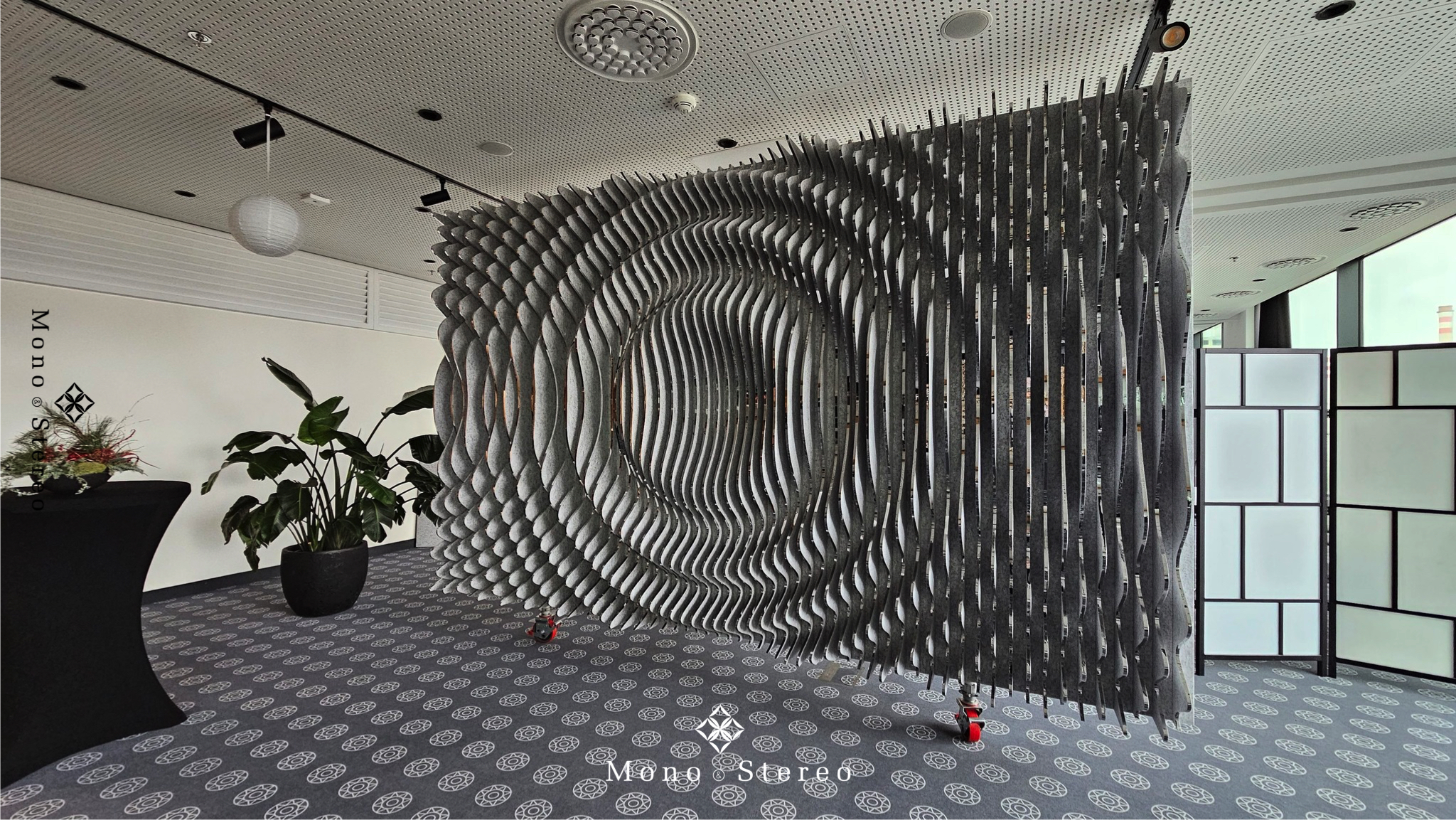
Developed under a separate brand name, RDacoustic Silentmax® is a 12 mm thick acoustic panel characterized by excellent acoustic energy absorption. It is meant to serve anywhere where reverberation times needs to be reduced: in modern interiors, but also in offices, meeting rooms, classrooms, auditoriums and so on. Made from 100% PET recyclate, it is durable, non-flammable and colour stable. All information about the acoustic properties of this material can be found at its respective webpage, silentmax.eu. The three-dimensional design, which divides the panels into acoustic segments, is a mix of simple cost-effective flat panels and the more advanced series of our hybrid diffusers. Compared to flat panels, it offers the same variability of integration into the interior but its active area is almost 2.4 times larger.

Acoustic Comfort
Reduce echo and noise in a modern and simple way. Noise is proven to have a detrimental effect on human health. Wherever architectural and interior design sacrifices or ignores the behaviour of sound in an enclosed space, compensatory acoustic treatments come to have their say. Too long a reverberation hinders concentration and makes sound indistinct. Listening to the spoken word in an environment with an echo is exhausting.
Improve Acoustics in Modern Interiors
Unbalanced acoustics are not solely an issue of commercial or utility spaces. Acoustics, despite having a major impact on the psychological well-being, are often neglected in modern apartments, ironically to favour practical use. Long reverberation times impair the clarity and intelligibility not only of speech, but of course also of music. They also hinder the ability of hearing for spatial localisation. Modern living spaces usually suffer from a lack of acoustically absorbing materials. They are woefully lacking in minimalist interiors without carpets.
Reverberation time is the main acoustic parameter of an enclosed space. It is relatively easy to measure and should range from 0.2 to 0.5 seconds. An overly dampened room feels oppressive, whereas in a room without any damping there is a noticeable echo; for example the unpleasant reverberation of a clinking spoon. Put simply, the issue is that of accumulation of acoustic energy caused by reflections from solid surfaces of the ceiling, floor, windows and especially the walls. Reverberation time can be controlled using a variety of soft, acoustically absorbent materials. In addition to specifically developed acoustic materials in the form of panels and diffusers, these include, for example, thick curtains, carpets, upholstered furniture and so on.