
Dealing with any kind of active room correction is a topic that is not widely embraced by most audiophiles. I have followed the development of different concepts over the past three decades and tried most solutions that incorporate DSP, as well as some analog offerings, yet the results were never really up to the expectations in the outcome. The biggest problem was that while these solutions provided notable removal of unwanted attributes in the listening room, the sheer musical energy was drained from the experience.
A few years ago, in my quest, I stumbled upon the Swiss audio brand PSI. I knew the brand from its professional side of the audio industry, where it manufactures active studio monitors and subwoofers. However, when they introduced the original PSI Audio AVAA C214 active bass trap, I immediately purchased the initial unit, which was soon followed by a second.
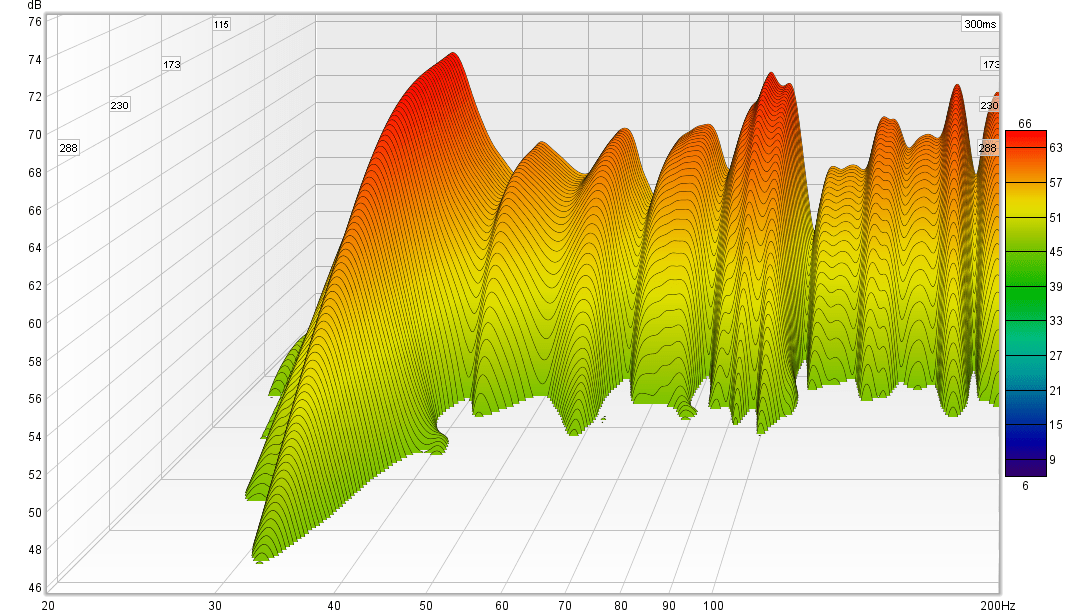
In a 20 m2 recording studio equipped with 2 big loudspeakers, the sweetspot was quite precise from 200 Hz upward but had a low end problem, especially at 32 Hz, due to the dimensions of the room.

With the addition of only 2 AVAAs, the problems were solved:
– Better balance from the lowest note until the highest one.
– 300 ms reduction of the 32 Hz reflections.
– better stereo imaging in the low end.
Slowly, the PSI AVAA made its way into high-end audio rooms. It only recently began to receive the attention it deserves, as many did not consider this type of device fundamental. However, as proven over the past few years and as I have experienced, AVAAs have become of fundamental importance as part of my reference hi-fi audio listening room and system.
The biggest challenge of any room, along with reflectiveness, is the issue of unwanted low frequencies. Addressing this requires drastic measures to tackle the highly complex problems of the low-frequency region, including inherent room modes that vary from room to room but cannot be ignored, as they present a major and fundamental obstacle to achieving the necessary sonic balance to fully benefit from any audio system.
In reality, if you want to tame those frequencies, there are a few options. However, because of the way these frequencies must be addressed, it requires a significant physical effort to reduce their impact – such as installing large bass traps and creating massive hollow spaces filled with various damping materials.
I designed my listening room from the ground up, following the cues of the Fibonacci sequence and golden ratio, along with precise calculations, a multilayered ceiling and floor, special acoustic plaster, a large acoustic door (acting as a bass trap), massive solid steel wall inserts, and more. I did my best to tame the room according to what can be calculated and what is clearly seen as obstacles in reaching the needed reference-level equilibrium. Yet, the bass management remained unsolved.

Anyone who has even briefly observed how most well-established and iconic studios are constructed has noticed that rooms are specifically designed to manage how bass is controlled and perceived. In high-end audio, the narrative is a bit different, as we are working with reproduction and want to escape the close-monitor impact that occurs in production and mastering studios.
Domestic reproduction requires a different approach, where RT60 time is managed differently, and rooms are tuned to be more lively, with increased decays and delays entering the space – not completely dampened, but featuring optimal room tuning that provides evenly distributed musical energy without any particular element standing out.
Most owners listen to different kinds of music, where impact changes on the fly, and a one-stop solution will not do.
This is where PSI Audio active devices come in. The AVAAs were designed and developed in collaboration with two Swiss universities over three years. These groundbreaking devices operate in a simple, yet highly effective way to address low frequencies and room modes.
Any room can be measured and scanned to identify where low frequencies are congested and how the bass propagates, but this is also a simple task that can be observed and defined through hands-on experience.
This is also how setting up and positioning the AVAA can be done. With music that has a strong bass foundation, the room will immediately reveal areas of excessive density. Depending on the room, there may be a few or many spots that need attention. The usual reference points are the front and back corners, as well as the main wall behind the speakers, and this is where PSI active bass devices immediately demonstrate their effectiveness.

The question that immediately arises – and that was prominent for me from the beginning – is: how do these devices affect the music? Unlike other solutions, PS Audio AVAAC active devices do not interfere with the music, its energy, or its phase.
However, once they are placed in their required positions, the listening experience changes drastically. For many, it is a wake- up call and a step into a very different perspective on familiar music material. The established listening experience is no longer the same. The artificially accented bass, caused by interaction with the room, blurs what is intended. At first, there may seem to be a lack of low-end foundation, but what is actually happening is a process of de-masking.
It is like enjoying the view of a mountain when fog covers most of it – only a peak is visible, and one cannot fully appreciate what is only partially seen. Yet with PS Audio AVAAC, something changes drastically: the music becomes a different reality, a full-blown vista that presents a pyramid-like experience from top to bottom, with clearer musical manifestation, better harmonicity, and a zen-like clarity.
C214
The AVAA is a pressure-based absorber designed to address low-frequency energy where it accumulates most. Placed in a high-pressure zone, it provides absorption up to 45 times more efficient than passive solutions of similar size. Its operating range covers the critical low-frequency band from 15 to 160 Hz, where room modes are most pronounced and conventional treatments are least effective. The results are immediate and measurable.
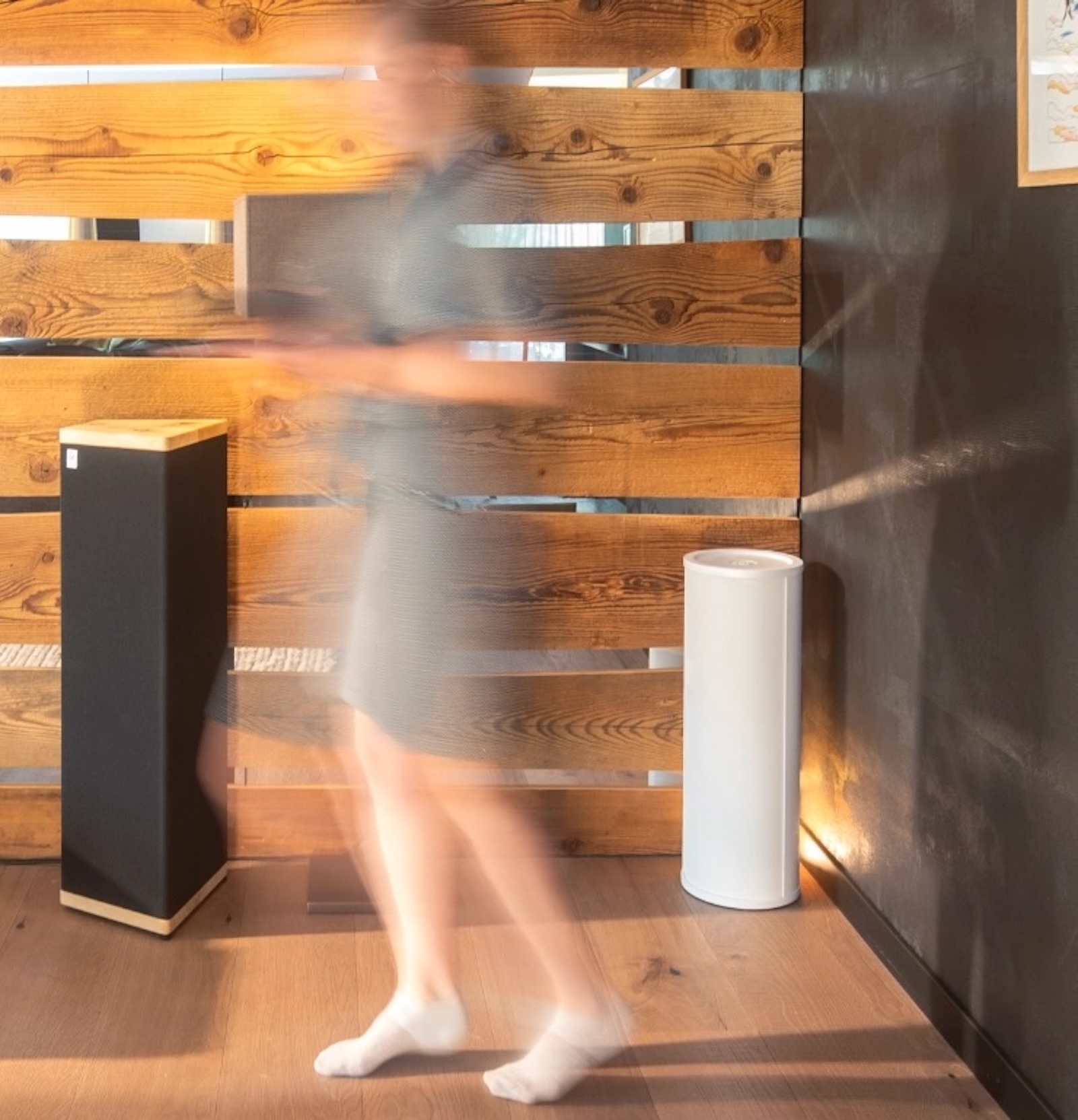
PSI Audio’s AVAA actively reduces room modes without requiring specialized knowledge or complex setup. Connection and placement are straightforward: plug it in, position it, and the improvement in low-end clarity is immediately noticeable.
Unlike traditional bass traps, which require significant space and often provide limited control, the AVAA uses advanced acoustic engineering to deliver efficient low-frequency absorption in a compact form. The result is a listening environment that feels larger, quieter, and more controlled in the bass region.
The Music
The PSI Audio AVAA C214 Active Bass Trap is effective with any music, but here are some bass-heavy tracks and albums where the C214’s benefits are immediately apparent at peak performance.
Amira — Medunjanin Damar
The opening track, “Pjevat Čemo Šta Nam Srce Zna,” from the enigmatic and enticing Damar, starts and ends with an enormous low end and maintains it throughout.

This is one of the reference tracks that demonstrates not only how well loudspeakers can handle congestion in the lower region, but also instantly reveals the room’s bass response and highlights the room modes.
In situ, the PSI Audio C214 effectively controls excessive bass energy, scales down the optimal ratio, preventing the room from reacting to unwanted low-frequency buildup.
The effect is unmistakable. In addition to addressing the most problematic low-frequency excesses, the music settles into a much better balance with noticeably improved accuracy.
The PSI AVAA enables the room to respond more naturally by absorbing unwanted low-frequency energy in a controlled, musically coherent manner.
Cowboy Junkies — Whites off Earth Now!!
Whites Off Earth Now!! It is one of my all-time favorite records, for many reasons. One of the strongest is seeing them live and appreciating their uninhibited performance style; this album captures that raw emotional impact without reserve.

The rendition of the mythical and mystical Robert Johnson’s “Crossroads” is one of the more low-frequency-laden tracks and stands out as a tour de force among reference tracks. On the fringe of eeriness, no matter how many times I replay it, the Cowboy Junkies’ haunting cover still affects me, and Margo’s poignant vocal always lingers.
The bass, after prolonged listening, can induce ear fatigue, and it is not necessarily associated only with electronic music, as is widely thought – “Crossroads” is perfect proof of concept. A pair of C214s put AVAA’s exquisite, exciting technology into practice. As proven on many other tracks, it induces no time lag and does not alter frequency balance or harmonic content.
Most interestingly, and somewhat unexpectedly, the sonic sphere of this already acoustically rich recording was further augmented, resulting in a noticeable shift in spatiality and in both horizontal and vertical expanse.
The impressive impact results from carefully executed technology. While DSP solutions often alter phase and timing, the PSI Audio C214, as the original AVAA active room absorber, preserves these.
Ray Brown & Laurindo Almeida — Moonlight Serenade
Moonlight Serenade, by two greats, Ray Brown and Laurindo Almeida, begins with a triumphant, bass-heavy “Mondscheinsonate/Round About Midnight.”

No streaming service version of the album does it justice or comes close to what the vinyl offers. It is also an antidote to the far-fetched opinion that vinyl records cannot reproduce bass to the highest degree. It needs to be heard and experienced to be believed.
During the most demanding passages of “Mondscheinsonate / Round About Midnight,” measurements showed up to a 6 dB reduction in the 30–150 Hz range, a result that speaks for itself.
The submarine-depth bass is often discussed, but the raw resonance of “Mondscheinsonate/Round About Midnight” takes no prisoners.
The parts with bowed double bass are tremendously loud, resonant, and at forte, literally making the room vibrate. It was most impressive to experience what the PSI Audio C214 could achieve without altering the song’s essence or smothering and obscuring the frequency content.
With the C214, the listening experience changes significantly. The blur disappears, and the familiar sense of a lifted veil over the midrange and highs is immediately noticeable.
To fully expand, Moonlight Serenade requires a relatively large room, at least 40 m², but then the magic happens. There is something about the uniquely syncopated interplay, which becomes much more apparent with AVAAs.
The PSI Audio active room trap does more than manage bass and room modes. It lets the musical ambience slip beneath notice, surprising even attentive listeners with its overall impact.
Conclusion
Bass management is not a subtle argument, but requires a profound approach, typically associated with enormous physical and financial undertakings.
For most music lovers and audiophiles, it is also a major aesthetic endeavor, as altering carefully designed listening spaces cannot simply be overtaken by reconstruction.
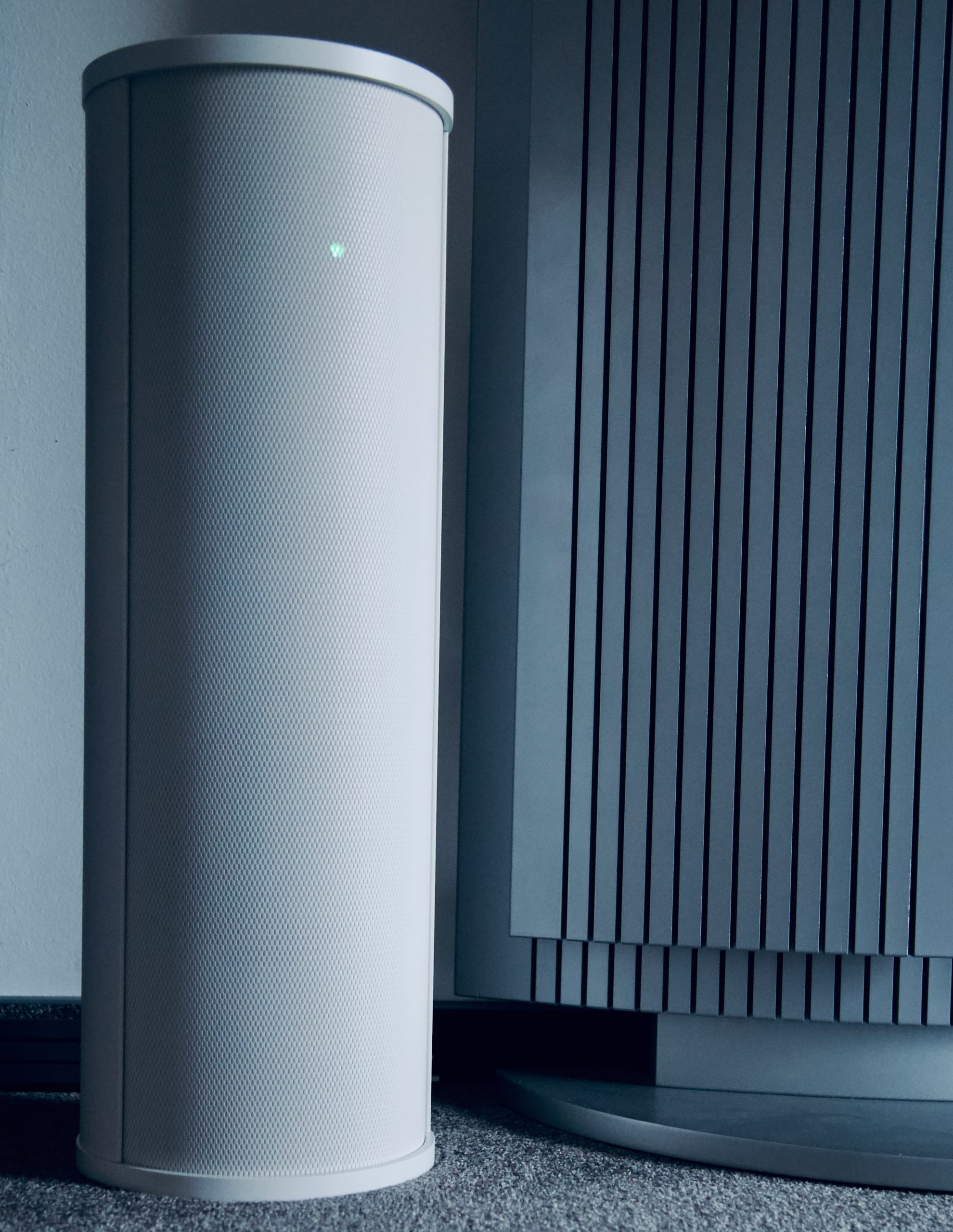
The PSI Audio AVAA C214 continues the strong legacy set by the C20, but features a slimmer, more stylish modern design, and integrates far more easily and seamlessly into the given environment.
It was no easy task to design something so efectual and compact, with the ability to create such an effect. The C214 is more than just a technical device that analytically removes unwanted lower frequencies; it works in harmony with the rest of the system and the room, achieving harmonic integration without disrupting the music, which is a significant challenge for most bass management solutions.

Simply put, C214 brings order to reproduced music in the listening space by addressing fundamental sonic conflicts intrinsically related to physical laws and psychoacoustics, and it enhances the tactile experience while maintaining a harmonious relationship with timing. The latter is something that most software-based solutions fail to achieve, as they also struggle to address issues within the domains of timing and phase. There is no EQ correction; the AVAA does not process the audio signal. It works directly on the room’s acoustic field without altering the sonic behavior of the loudspeakers.
A pair of C214 brought unprecedented clarity to my reference system and listening room, and have found their permanent place in the back corners.
For what it represents, I am pleased to recognize the PSI Audio AVAA C214 with the 2025 Mono & Stereo Editors’ Choice Award, and I’ve purchased a pair.
In the near future, I will explore an additional placement of the C214 in one remaining spot that needs attention, so stay tuned for a future write-up.

Price
- CHF 2750 (+tax)
Technical Highlights
Highly effective Bass Absorption
- As effective as a perfect passive absorber up to 45 x its size.
Digital solution
- Ultra low latency (less than 0.2 ms) processing via 2 independent DSPs.
Works in any type of room
- Effective in small or large rooms, including recording studios, mixing/mastering spaces, and high-end home audio setups.
Absorption only
- Thanks to our AVAA technology, there is no signal emitted, only absorption.
Plug and Play
- No calibration required. Simply place it where the room modes are.
Portable
- Take it from your recording room to your mixing studio easily.
Contact
RELEC SA
Rue des Petits-Champs 11a+b,
1400 Yverdon-les-Bains
Switzerland
Tel: +41 24 426 04 20
Web: www.psiaudio.swiss