Digital audio has reached its peak, and while many are weaponizing nostalgia, exotica, and the fringe science, with Varèse, dCS takes an objective, giant leap into the future.
While the Vivaldi Apex system has already been positioned as an uncompromising, modern, cost-no-object digital front end, Varèse opens up a new dimension.
In an era of marketing loudness, dCS’s latest cost-no-object flagship digital front end exemplifies quiet extravagance, showcasing ultra-high-end audio at its best. It embraces technical prowess, avoids unwieldy form factors, and combines ingenious engineering with seamless, stylish design that never overwhelms the conversation through sheer physical size. Instead, it introduces a genuinely 21st-century, five-component, state-of-the-art digital replay system that looks different, sounds different, and affects the listener differently – beyond comparison.
AN ENDGAME ULTIMATE MUSIC SYSTEM
When something this radical enters the game, it challenges countless preconceived ideas, assumptions, and expectations, and yours truly was not immune.
What Varèse does differently is create a unique directives, an aural reciprocity with music – something I had not associated with the digital realm until now. As with real-world musical impact, the music becomes a living conversation.
This may be the boldest claim to make, but I urge those with the means who are on a quest for the sonic grail to allow themselves to experience what dCS has to say.
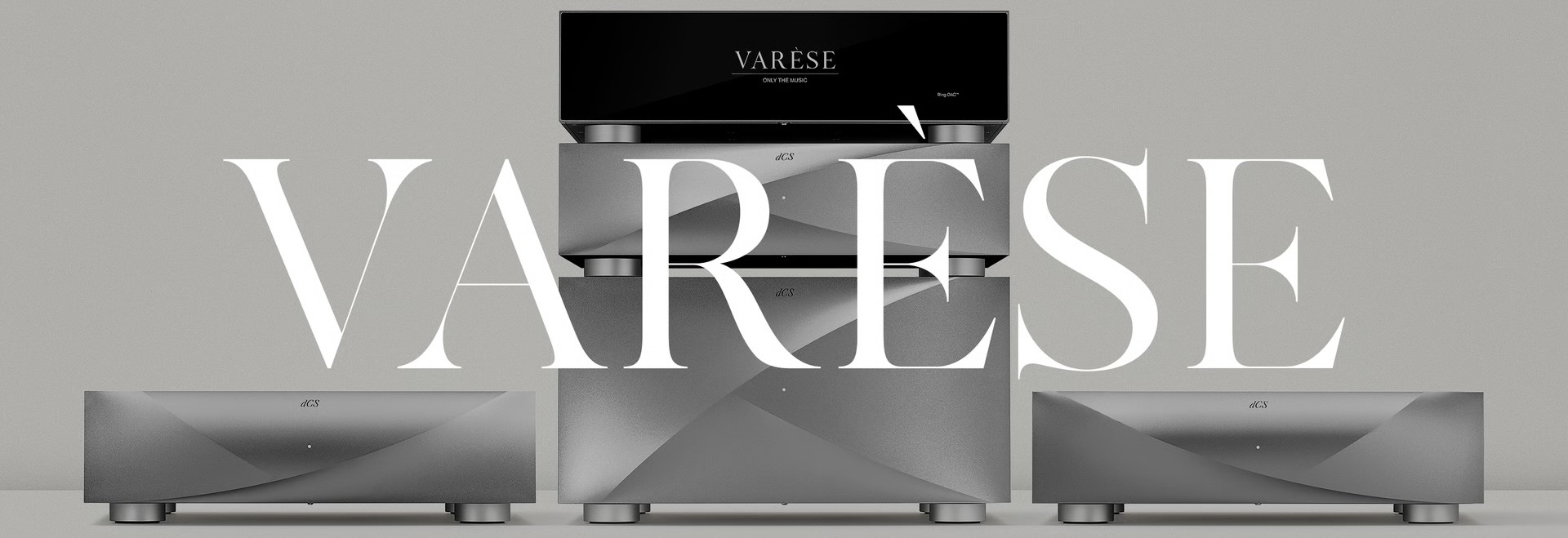
Varèse is not about resolving the paradox of reproducing music, nor was it meant to be another collectible product kept out of reach for its own sake. dCS sends an unequivocal message: when engineering is done right – when the process of relating everything to everything is fully realized – there is a meaningful difference. And Varèse does not need to whisper its capabilities; it strikes directly at the music’s epicenter.
I am fairly sure that even the dCS engineers and the entire team were, at one point, extremely surprised by what Varèse is capable of – a unique stirring of the heart that allows a playful diversity of music to form freely. I could stop here and end my review with that sentence, but there is so much more to tell, as you can read throughout the review.
Many high-end and ultra-high-end DACs can exaggerate aggression in music playback, turning the listener away. Varèse does the opposite. It engages the listener with the music on a level far beyond mere decoding, revealing beautifully tangible peak expressions at every turn.
Regardless of price, DACs can too easily induce a lifeless character, creating virtual figurines instead of reflecting the essence of a real, three-dimensional, physical presence. Varèse goes beyond any kind of projection. It paints the sonic canvas with utter realism – but at this level, that is still not enough. Varèse reveals the full variety of character captured at the source, and that is the rarest attribute of all. Without it, emotional interconnection cannot be established.
As always, below are several reference tracks and albums that highlight the uniqueness of the dCS Varèse: a chameleon-like ability to adapt to the musical material, never getting in the way, never leaving its own imprint, and always in tune and in sync with the music.
JUILAN LAGE – ARCHLIGHT
Archlight, by guitar virtuoso Julian Lage, is an album that gets so many things right at once.
It presents a challenge to any DAC operating far above the threshold of merely being “great enough,” allowing the splendidly recorded and performed music to take command.

Varèse follows the narrative so seamlessly that it left me in awe through many repeats. The dCS flagship DAC system’s ability to render confrontational intensity sets it apart by a mile, and despite being a studio-recorded album, it has a uniquely strong “being there” factor that is rarely captured and even harder to reproduce.
Varèse’s uniqueness lies in the way it sets the scene with an unusually dense field of aural references for the instruments. There are no sonic magnifications at play, but rather a top-tier, distinctly elevated perspective preserved at its Core – a standout brilliance that redefines the mindful threshold, with no checklist to complete for it to be considered sufficient. Even brief moments of awareness are palpable and repeatedly inviting.
There is no forced, artificially heightened sensory engagement; instead, there is a deliberate immersion in the music that shifts the listener’s perception and prompts a reconsideration of the boundary at which awareness, attention, and conscious engagement occur.
PAT METHENY BRAD MEHLDAU — METHENY MEHLDAU
As with pianos such as Mason & Hamlin, Shigeru Kawai, Fazioli, Pleyel, Blüthner, Steinway, and Bösendorfer, which differ in many ways and can be played to sound soft, dark, open, and distinct, etc., pianists also vary in their playing, fundamentally affecting the sonic outcome.
This uniqueness is celebrated and is what differentiates piano players. In its simplified complexity, each has its own timbral signature.
Mehldau’s mellow, melancholic playing – broad and weighty – is instantly recognizable. It is especially impressive how Metheny can tune into Mehldau’s micro-universe without forcing his own playing, yet still add his presence harmonically and rhythmically, in perfect sync – and of course vice versa. Pure magic in motion.
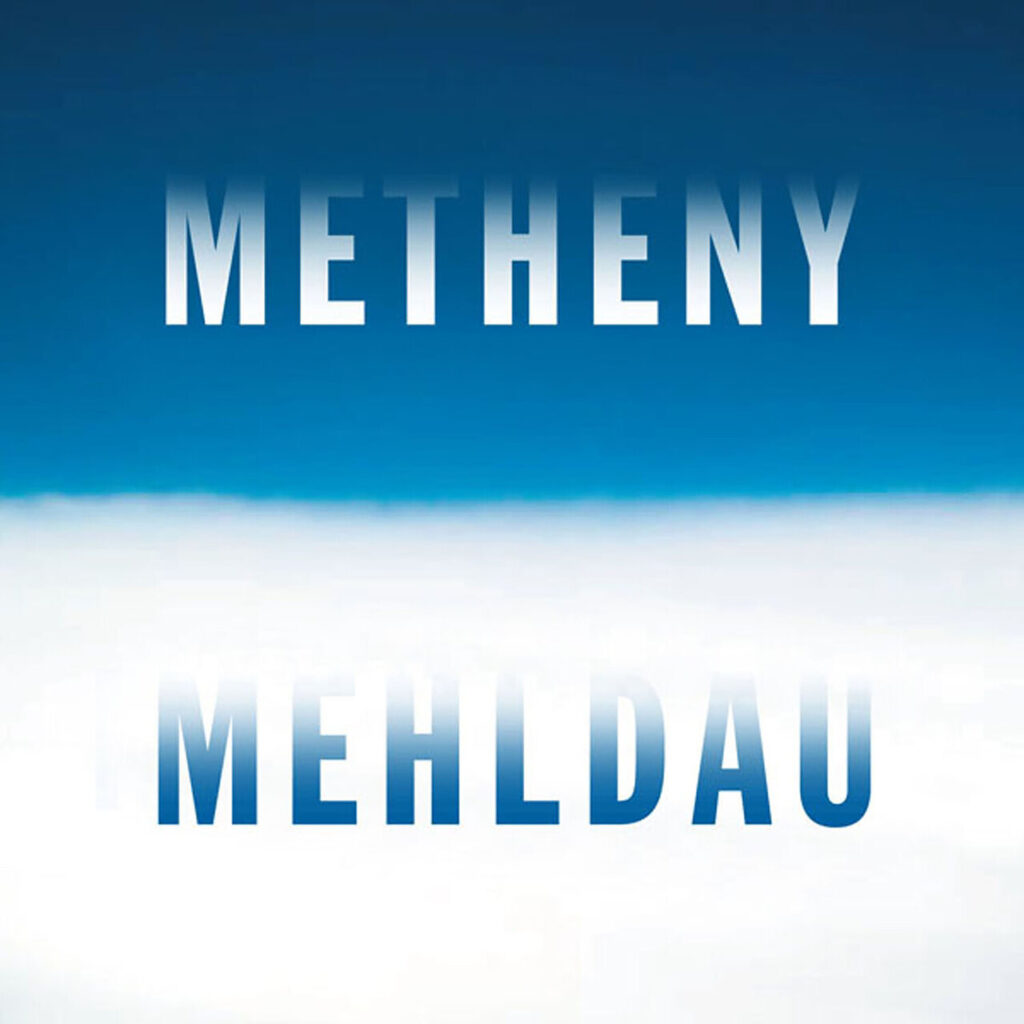
What might initially sound like a high-spirited duo recording is far more complex and profound, reaching musical depths that are rarely, if ever, matched. It goes far beyond two instrumentalists in a well-recorded session.
Metheny Mehldau is encrusted with rich harmonies and syncopated rhythms. Two instruments, one complex universe of micro and macro arrays, musically enriched to the point where the music simply flows, with guitar and piano naturally filling the gaps of time and place.
The whole album is intriguing, mystical, and challenging, but perhaps most striking is “Summer Day,” which more easily gets under your skin. Once there, its underlying, foundational effect takes hold.
Where it gets especially interesting – and in Varèse’s most distinctive favor – is in the realm of harmonic spacing. With the dCS flagship DAC, a uniquely distinctive and enticing level of discernment emerges, fundamentally occuring at a psychoacoustic level.
With Mapper 1 and F1 (first filter setting) engaged, Varèse creates a precise ladder octave spacing without irregularities. Regardless of price, most DACs fail at this level, producing a sonic blur that pushes tones outside their intended timbre, making both piano and guitar sound far more percussive than they should.
Varèse doesn’t hint at or tamper with, but reveals the piano’s percussiveness objectively and stops there, not altering it further, presenting clearly defined guitar and piano tones, with the lowest and highest notes in upper and lower octaves without wicked muted overlays and letting each distinctive instrument’s harmonies sound as they should.
When complexities begin to be summoned with such consistency and in such a concrete form, there is no way this can be taken lightly, casually, or seen as a happy accident.
When executed properly, such a fundamental order allows Varèse to probe more deeply and intensely into the music, conveying essential musical attributes with an uncanny proximity to reality. As a result, it forms more powerful emotional bonds that, in the very best sense, have little or nothing to do with ordinary digital playback.
Adding this virtue to all the previously mentioned qualities casts a brilliancy on what the new five-box, cost-no-object dCS music system actually is and the elevated level it has reached.
There is simply no going back after these sonic revelations and enticements, and the empowerment of music playback, with Varèse fixating on and pushing the threshold to a point that feels highly unlikely to be matched.
BILAL – 1ST BORN SECOND
Varèse’s ability to fuse boldness and delicacy expands dramatically with Bilal’s 1st Born Second—a blend of jazz, hip hop, scat, reggae, and rock recorded at the legendary Electric Lady Studios in New York under the direction of Dr. Dre and Soulquarians member J Dilla – channeling singers’ free-form expression into a more mainstream form.
Varèse’s out-of-the-box, dynamically powered inner Core captured the album’s tension remarkably well, far above the norm and usual upper-echelon expectations, revealing and delivering fractured perspectives simultaneously and seamlessly.
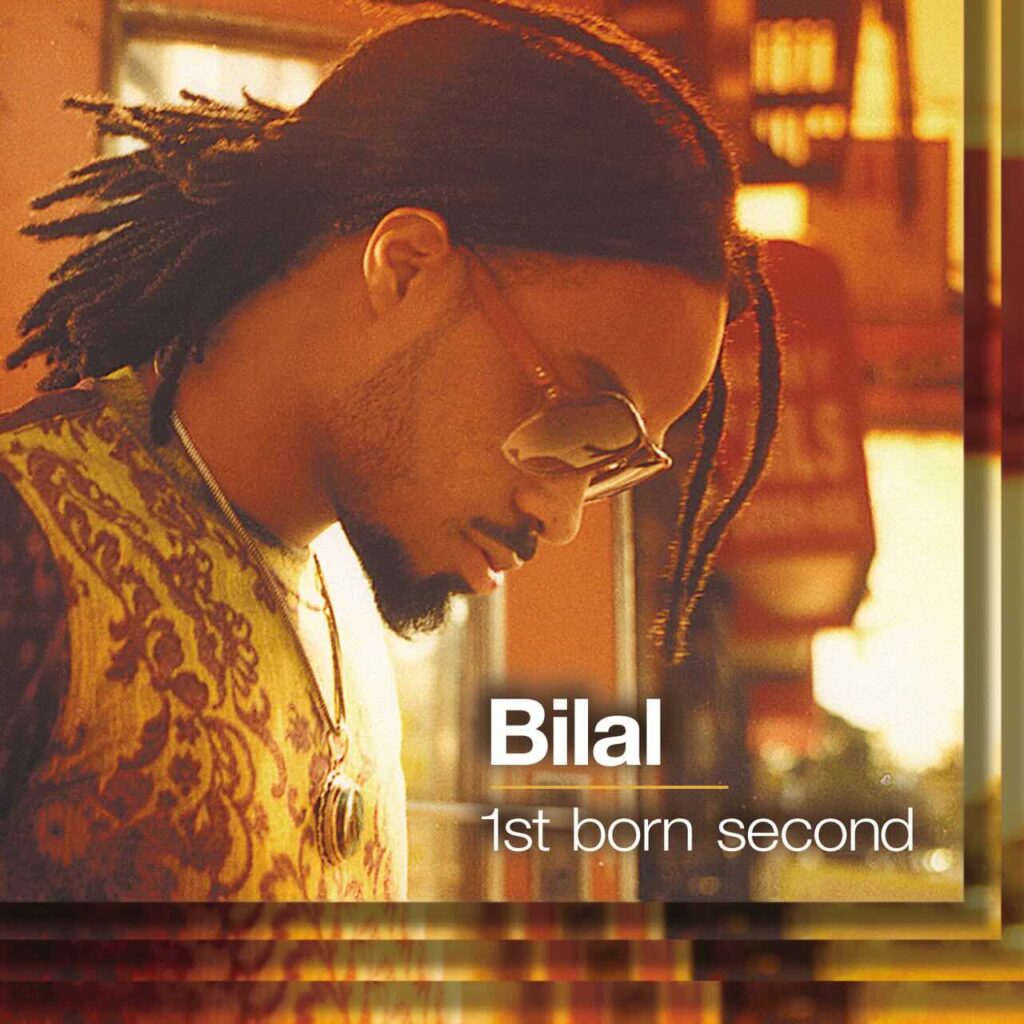
“Fast Lane” and “Reminisce” came to life with striking stamina and unreserved power, locked and loaded at a mighty mark, showcasing dCS’s top-tier DACs’ monstrous dynamic capabilities without losing a fraction of a beat or a hint of force.
Varèse’s powerful Core radiates consistency, unleashing bursts of energy lightning fast when needed, yet remaining in control at all times, following the syncopated rhythms with magnetic precision.
With such a well-produced album, there are no ifs or maybes; it either hits or it misses. A Varèse take-no-prisoners dynamism stands out for its authoritative output without imposing the kind of sonic dictatorship many DACs do.
On the contrary, 1st Born Second’s tracks are rendered with genuinely distinctive ardor, vibrancy, and vigor.
THE FANTASY FILM WORLD OF BERNARD HERRMANN
In the reproduction of classical music, there is a distinctive concentration mark that greatly increases the complexity of accurately reproducing an orchestra.
Herrmann’s bizarre, surreal score for The Day the Earth Stood Still, performed by the National Philharmonic Orchestra, can instantly doom a digital front end.
There are so many variables at play when the music unfolds with the orchestra’s inner movement, and I’ve detected something truly unique, unlike anything I expected or encountered so far: a prominent ease of movement.
With orchestral reproduction, one is usually left with a limited imagination, engaged with insufficient aural information density.
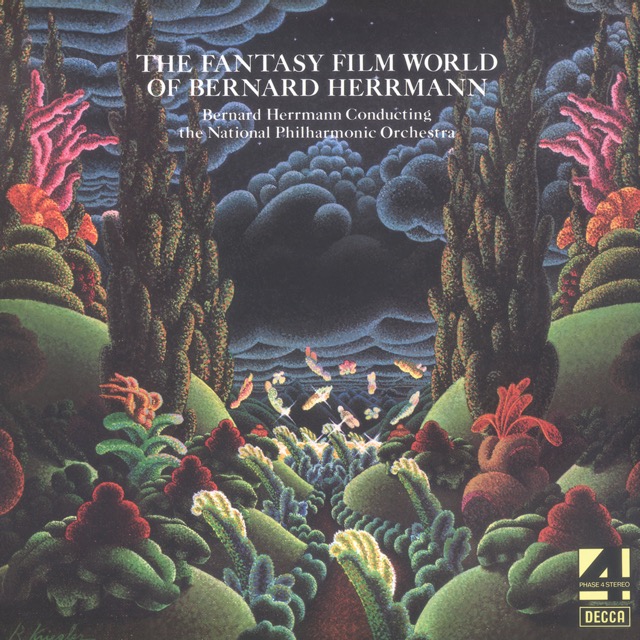
Varèse again went further than mere surprise with The Day the Earth Stood Still by aurally anchoring the central essence of orchestral motion without foregrounding any attribute, yet always keeping narrative, tempo, and pacing as the primary guides, and doing so without breaking the golden trinity of timbre, tone, and color.
Varèse’s remarkable sense of scale, in both horizontal and vertical expanse, opened up a magnificent sonic sphere, with music driven entirely by its own momentum. The room and speakers seemed to disappear, and a kaleidoscopic eeriness left no guessing, striking with full impact.
The dCS DAC’s remarkable handling and decoding of information, the extraordinary density of focal points, and the precise, even distribution of acoustic cues left me in awe. The holographic presentation had little to do with mere reproduction and much more to do with the recurrence of the kind of energy experienced in the back row of a concert hall.
On top of that, the splendid showcase of drama and grand scale elevates Varèse not only to the top tier but to the level of a game-changing, top-class front end.
TOOL – FEAR INOCOLUM
Every time I play Fear Inoculum, it sends a shiver down my spine, especially “Pneuma.” There is something strikingly juxtaposed about this song – distant yet close-knit, connecting the dots of brutalism with feather-light tenderness. When the system and front end allow, this becomes a powerful, hard-hitting medley on so many levels that it’s difficult to remain unaffected, even when listening inattentively.
With Varèse, “Pneuma” cuts through the fabric of progressive and alternative metal with extreme physicality, set against a pitch-black, Vanta-level background, evoking another lucidity, a woke cognizance that made me reconsider my understanding of the front end in general, regardless of type.
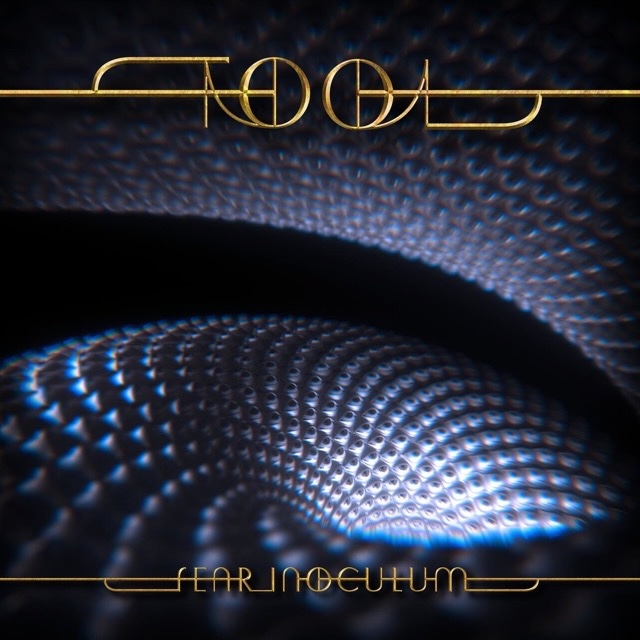
“Pneuma” is relatively slow-paced yet packed with hypnotic, ever-evolving rhythms. Among other Varèse-style, head-scratching, mind-bending impacts, the varied interplay of harmonicity and inharmonicity lingered particularly long, even after repeated plays of this extremely demanding track had ended.
The track’s almost brutal, darkly uncompromising composition can trigger sonic collapse, and the front end starts behaving like muffled output when it’s unable to render Tool’s full scope. As an antidote, dCS Varèse never feels restrained. It anchors Fear Inoculum without disruption – soothing when lyrically slow, consistent through varying time signatures, and conveying an entirely different atmosphere from what I’m used to with this recording.
Some DACs decode Fear Inoculum uniformly; Varèse reveals it in layers, with grit and grip, complete, never holding back the emotional impact, no matter how poignantly the music resonates – and this is where it truly matters.
“Pneuma” and the rest of the songs call and demand for the music to be unleashed, both musically and emotionally, without sparing a hint of tempestuous intensity.
THE CONCLUSION
The world of zeros and ones, appealingly finite in number, is still too immense to fully grasp, as is evident from what’s out there.
There’s little doubt that digital is tied to still-evolving efforts and that various DAC solutions will continue to develop. However, there is a clear and demanding task: to make the most of the medium – whatever it may be, streaming, local playback, physical discs, etc.
In the era of AI-generated marketing blurbs, imagery, and even circuitry, many ultra–high-end audio brands are perceived as bling rather than true luxury. In a genuine luxury segment, performance cannot be separated from the designation itself. Varèse is the opposite: a meaningful luxury that few can afford, a statement to aspire to.
Staying true to its heritage while always operating in discovery mode is dCS’s undisputed leitmotif, driven by constant, crucial developments and discoveries in the realm of digital audio. The manufacturer has spent its career learning to refine inner and outer essentials with tech integration, executed musically and artfully, setting the standard for an emerging frontier where music reproduction is fully mastered.
With its solid portfolio and constant stream of innovative product releases, dCS has nothing to prove yet much to say. dCS has an ear and eye for excellence; nothing related to Varèse can be taken as an afterthought. Varèse strikes a balancing act through a refined blend of contemporary and future-retro design and artisanal voicing, touching the beating heart of musical reality.

The renowned English brand has perfected the art of electronics manufacturing, mastering the technologies, and with Varèse it further distinguishes itself in the art of music reproduction, sparing no effort to infuse musical sensitivity into its craftsmanship, regardless of the product, and embodying legitimacy in technology, human skill, and circuit integrity.
When a product of such pedigree is launched, it is not meant to be predictable, but to radically shift an unbroken lineage of mastery and Varèse stands at the apex of the dCS portfolio and rivaling the very best of both mainstream and independent brands.
The new dCS flagship music system goes beyond unconventional appeal, boldly continuing the brand’s renowned pedigree as the industry standard that sets norms and pushes the boundaries of digital reproduction.
The new dCS five-stack, upper-echelon music system was not envisioned as exuberantly priced ultra–high-end audio product, designed for hype-driven, high-octane, contrast-heavy showroom drama. It was conceived from the ground up to host hours of fatigue-free listening. But that’s only part of its charm. Varèse delivers that in-situ, “aha” moment. It operates differently and represents a Rosetta Stone for what a new generation of digital-to-analog converters can be.
Is Varèse an impressive feat of technology? It is. The main question should be: “Is this meaningful?” With Varèse, dCS steps ahead of the curve as a solution to listening fatigue – a condition so many have become accustomed to, regardless of price or being blinded by bling.

As a statement of intent, it represents a treasure trove of unheard details and musicality. As a time capsule, it taps into past recordings yet remains in interactive conversation with whatever is contained in the music – if it’s there, it’s revealed.
While all dCS DACs come from the same sonic cloth, there are varieties and certain articulations that only Varèse can reproduce, introducing a majestic playground and an immense aural canvas.
Its dual-mono design allows Varèse to deliver thunderous power and finesse at every moment, but when in motion it is all about quiet sonic elegance and unreserved momentum, free from irritating forcefulness that assaults the listener, with its mighty character available on demand at any time.
There is mathematical magic under the hood alongside electronic wizardry, built on decades of heritage. Such potency translates into an extraordinary juxtaposition of extreme confidence and calmness, backed by engineering with exceptional attention to detail.
As in movies, dealing with frames and the persistence of vision, in digital audio, we deal with the persistence of sound, decoding streams seamle ssly, probing precisely into the headstrong perseverance of sound and reducing constant micro–macro corrections.
Varèse continues the legacy set by Vivaldi Apex and Vivaldi One Apex. The dCS team of engineers resisted the temptation to overcorrect the signal, yet moved everything forward and combined it into an all-conquering digital music system.
What appears (and it is!) to be a complex habitat is made extremely easy, infused with luminous dCS DNA, ready to use with an astonishingly well-considered choice of technical approaches, software integration, and simplified operation.
One can only imagine, and it is overwhelmingly impressive, how much thought went into the design of the dCS state-of-the-art digital-to-analog system. The paradigm of creating a music system that functions as a whole should go far beyond the sum of its parts, and Varèse maximizes the impact of each recording and each artist’s uniqueness in ways that surpass what orthodox DAC solutions provide.
The crucial element in presenting a cost-no-object front end is making it transparent, easy to engage with, and seamlessly operative, so that non-audiophiles and music lovers in general can understand and be moved by what is possible. That is too often overlooked, and as a result, it fails to reach new potential clients.
Many brands are repeatedly going back to the drawing board and rethinking their foundations. dCS thrives on innovation and pushes forward with a laser-focused mindset, delivering organicity and making a solitary, stand-alone statement – without having to shout. What listeners at this price point are looking for is authenticity.
The Core DNA is rooted in presence and performance, and one-of-a-kind initiation into a higher plane of music listening. Shifts in sonic taste may change, but the raw power and intimacy of music do not. And this is exactly where the dCS flagship DAC excels in spades.
In an era of overwhelming marketing – AI-generated blurbs confidently assuring customers that they have arrived, while in reality much remains in the realm of aspirational realism – Varèse offers a curious juxtaposition of digital devices pushing back against digital fatigue. It strikes at the very epicenter of music as a proof of concept, reflecting deep respect for the art and allowing the flagship to reach a musical destination worthy of the highest standards.
Each track or album, regardless of genre, becomes a conduit for pure emotion, allowing the most essential element – the medium of reproduction – to carry that genuine directness toward a soul-binding connection, pushing everything further and beyond.
Normally, with this kind of product, one asks what it does better and by how much. With Varèse, something completely different happens. It is not about more, but about less: less artifice, less harmonic unevenness, less diffusion and spatial blur, less fatigue. The resulting accumulated “less” is not a subtle, minor, or barely noticeable improvement.
Varèse reproduces encoded music with astonishing lightness and harmonic richness. Honestly, I expected to frame my findings completely differently, more in audiophile terms: greater dynamics, transparency, speed, and finer leading edges of attacks. Yet Varèse’s fluidity and harmonic allure are unparalleled, offering new depth and dimension and an unheard-of level of sonic realism.
Set from the outset with Varèse with F1 and M1 filters selected, and never needing to change anything, speaks volumes and proves that, with digital audio, one cannot escape the impact of doing it right – musically correct, clearly consequential to technological choices, innovation, and proper engineering.
I’ve been absolutely enamored with it. It put me into a flow state instantly, remaining faithful to the material, with decisive musical content kept in outstanding proximity. Each new track and album offered clear confirmation that the reproduced material is exactly what it claims to be. Nothing falls outside the remit of music, and most uniquely, it ignites that goosebumps-and-butterflies effect, sweet intoxication, like being freshly in love – the right compound of chemicals.
Perhaps the biggest advantage of Varèse, and the most important one, is that it places the listener in a dimension they do not expect. It caught me completely off guard, renewing the very archetypes of music playback.
At this higher level of operation, music should be intimate, soulful, grounded in sonic fact and emotional truth. Varèse’s unique, diametrical fusion of moving the heart while challenging the mind about what is possible, and where the borderline of possibility truly lies, is exceptionally distinctive, harnessing sheer musicality, minimizing any blurriness, and embracing the directness of music, while nesting a conscious and authentic voyage.
Undoubtedly, a tremendous amount of work, patience, and time went into Varèse, reflecting the brand’s responsibility to ensure consistent quality and to serve as a barometer of standards, reinforcing its relevance with an unwavering commitment to performance, precision, and excellence. There is no efficiency-driven, reduced-labor prioritization manufacturing, just as with the rest of their products.
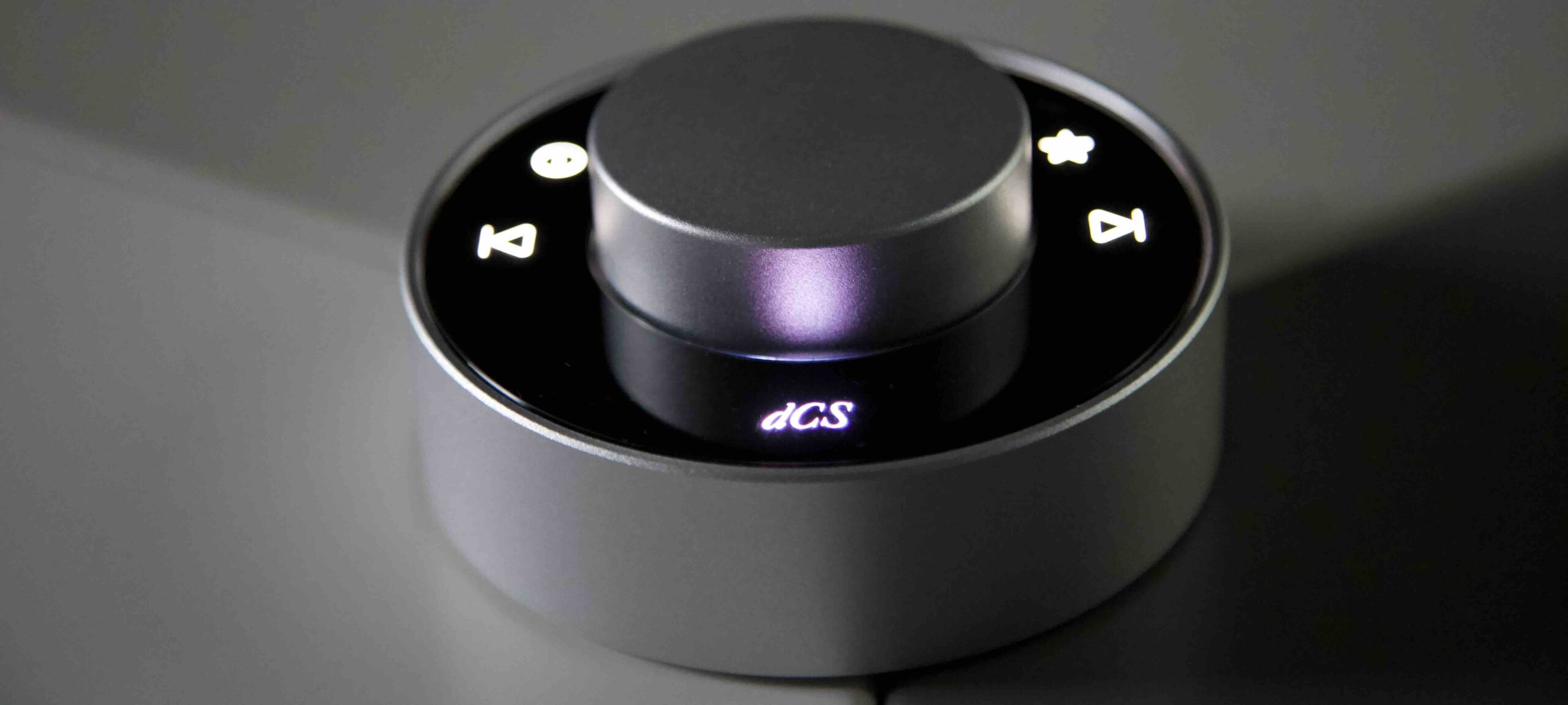
In a world of radical fragmentation on all fronts, the dCS flagship, almost as an act of rebellion, slows the pace and embraces the freedom of 21st-century gestalt, boldly and proudly embodying the design cues of Parametricism – a profound sculptural presence – before you even begin to consider the sound. To reach new marketing segments, I sincerely hope that others will converge toward this.
Yes, Varèse is a top-tier product at premium pricing. But those lucky owners are paying for engineering, heritage, and refined ears. All that might not be fully grasped at a glance without understanding the dCS heritage, but it can be felt in every note.
When is a DAC more than the sum of its parts? When it delivers music at the most steady, fatigue-free rate, while embodying a unified, not divided, innate ability to communicate with the music.
I can only express my deepest respect and appreciation for such a thoughtfully conceived and exquisitely refined high-end audio product – one that exudes quality in every detail and evokes a fascination similar to my fondness for haute horology and haute automotive design. It is one of those rare pieces of electronics that, in the absence of mechanical and electronic distractions, disappears to become a musical storyteller. And what a storyteller Varèse is!
In conclusion, this was a demanding task and endeavor, but what a sonic ride. It was a pleasure and a privilege to test Varèse, dCS’s top-tier music system – a preeminent DAC that radiates poise and aural proportions previously unheard – an ultra-musical DAC with one-of-a-kind, ultra-level spatial fidelity.
When you know, you know – and apparently dCS knows. By bridging technology and musical storytelling in a one-of-a-kind way, Varèse is more than worthy of receiving the first ever combined Mono & Stereo Editor’s Choice and Uber Audio award.


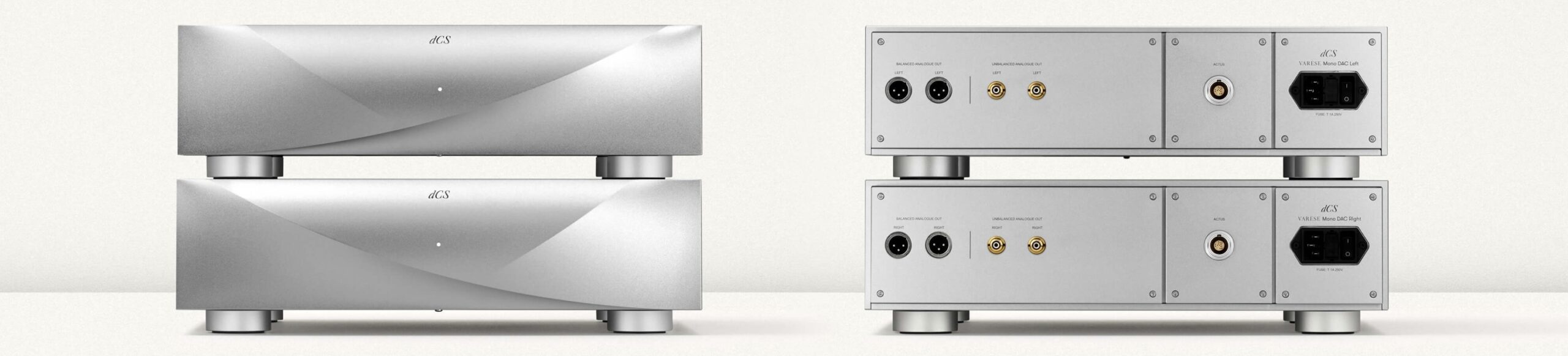
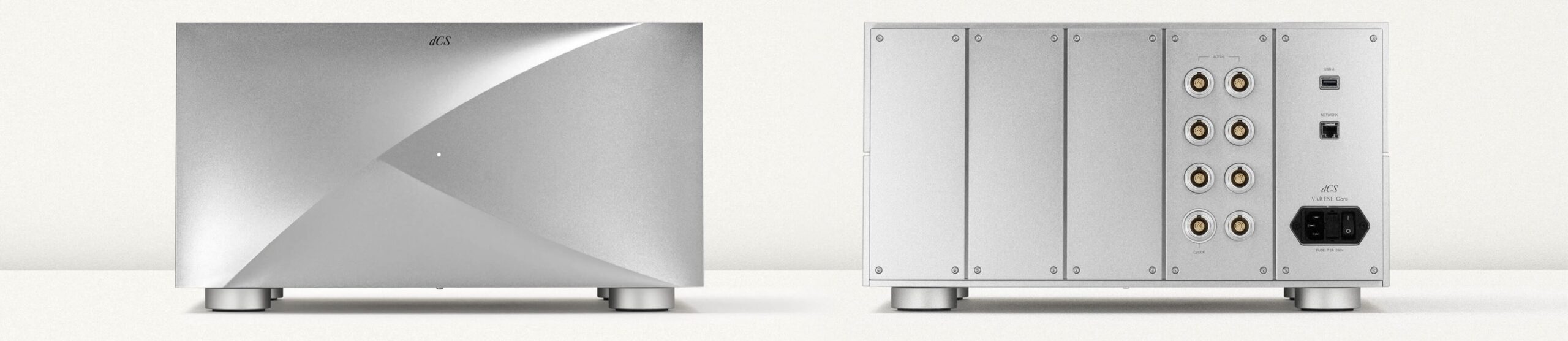
With all that, there is also the ACTUS bespoke, streamlined interface – the powerful Core that distributes communication via a single ACTUS cable to all devices – and a modern, top-quality touch display with a beautifully curated OS.
At your fingertips, you can control all the important functions: a single-button on/off on every component, a stylish, modern Bauhaus and Jobs-Ive-like refined round remote with all the necessary features, and a motion sensor that illuminates the controls, making the enjoyment of music instant and trouble-free.
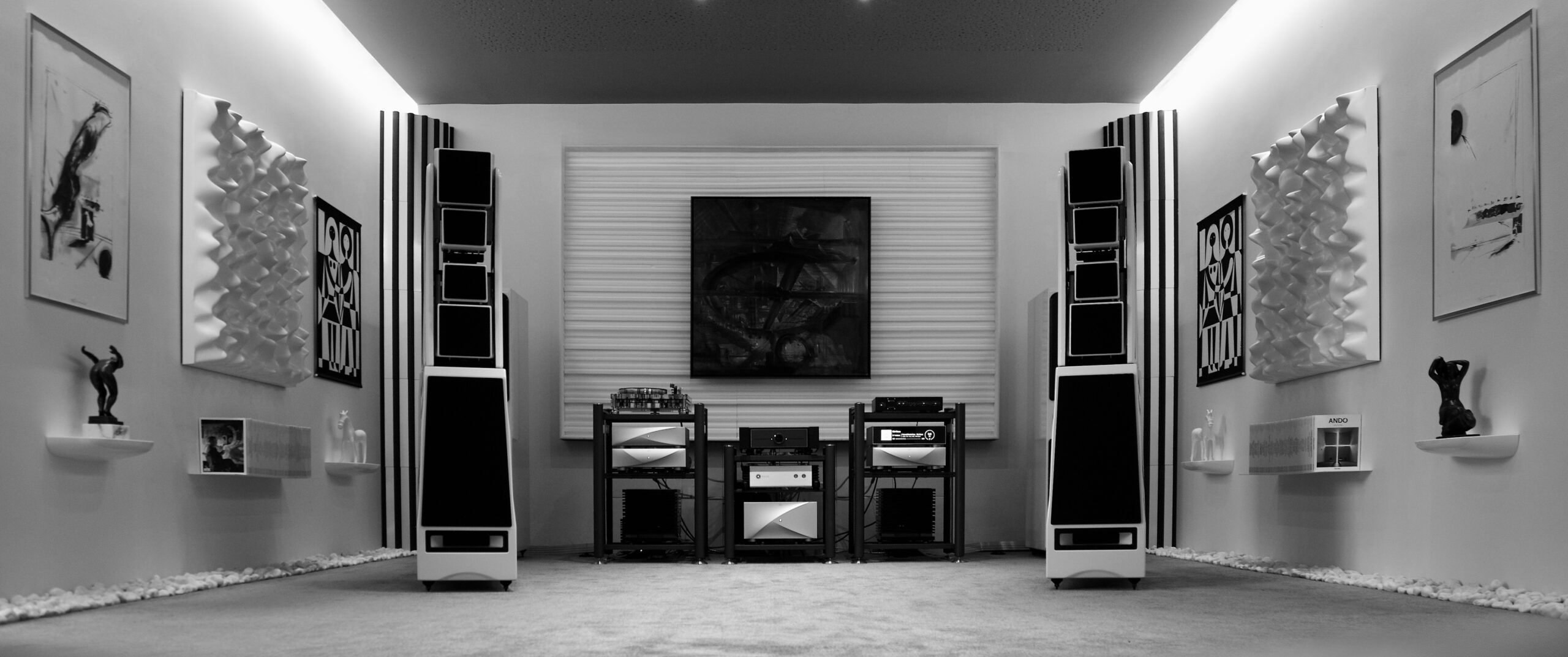
There are also iOS and Android apps that connect to and control the complete music system via phone, tablet, or M‑chip-based Apple computers. It doesn’t get easier or more seamless than that.
I’m still grappling with the impact of a nearly decade-long R&D effort that produced one of the most striking high-end audio products I’ve had the chance to evaluate. •

PRICE
£277,000
SPECIFICATIONS
Finish Silver or Black Anodised Aluminium
Transport Mechanism Sound United D&M SACD mechanism
Dimensions All dimensions given as height x width x depth. Allow additional 60mm depth for ACTUS cable connectors plus 120mm for ACTUS cable bend radius. Allow space for air flow around the unit.
User Interface: 131mm x 444mm x 450mm (5.2″ x 17.5″ x 17.8″ includes Bluetooth aerial depth)
Master Clock: 131mm x 444mm x 437mm (5.2″ x 17.5″ x 17.3″)
Left Mono DAC: 131mm x 444mm x 437mm (5.2″ x 17.5″ x 17.3″)
Right Mono DAC: 131mm x 444mm x 437mm (5.2″ x 17.5″ x 17.3″)
Core: 244mm x 444mm x 438mm (9.7″ x 17.5″ x 17.3″)
Transport: 131mm x 444mm x 437mm (5.2″ x 17.5″ x 17.3″)
Weight
User Interface: 14.6kg / 32.2lbs
Master Clock: 15.7kg / 34.7lbs
Left Mono DAC: 18.7kg / 41.3lbs
Right Mono DAC: 18.7kg / 41.3lbs
Core: 33.1kg / 73lbs
Transport: 20.1kg / 44.3lbs
D/A Converter Type dCS Differential Ring DAC
Analogue Outputs
2x pair balanced outputs on 4x XLR connectors. Output impedance: 1.5Ω
2x pair unbalanced outputs on 4x RCA connectors. Output impedance: 52Ω
Maximum load: 600Ω (10k-100kΩ is recommended).
Output levels: 0.2V, 0.6V, 2V, 6V rms for a full-scale input, set in the menu.
Digital Inputs
Ethernet on RJ45 connector for network streaming.
USB Type A connector for mass storage devices (navigated using Mosaic ACTUS).
If the Digital I/O Module is fitted to the Varese Core:
USB 2.0 interface on B-type connector, accepts 24-bit 44.1 – 384kS/s PCM, DSD/64 & DSD128 in DoP format.
3x AES/EBU inputs on 3-pin female XLR connectors, accepts 24-bit 44.1 – 192kS/s PCM & DSD/64 in DoP format. AES1+2 act as a Dual AES pair, accepts 24-bit 88.2 – 384kS/s PCM, DSD/64 & DSD128 in DoP format.
Digital Outputs If the Digital I/O Module is fitted to the Varese Core, 1x S/PDIF interface on RCA Phono connector, outputs 24-bit 44.1 – 192kS/s PCM, DSD/64 in DoP format.
Transport Digital Outputs 1x ACTUS connector. While a CD is playing, the interface outputs 44.1kS/s data. While an SACD is playing, the interface outputs DSD data.
Wordclock I/O If the Digital I/O Module is fitted to the Varese Core, 1x Word Clock Output on 1x BNC connector. Outputs a TTL-compatible Wordclock at either 44.1kHz or 48kHz depending on the input sample rate.
Sample Frequencies and Formats
44.1 – 768 kS/s up to 24 bits
DSD/64, DSD/128, DSD/256, DSD/512
Native DSD + DoP
FLAC, WAV, AIFF
Residual Noise Better than 118dB0, 20-20kHz
Spurious Responses Better than -115dB0, 20-20kHz
Power Supply Self-selecting for 100, 115, 220 and 230V AC 50-60Hz
Power Consumption In use: 30W Standby: <2W Sleep Mode: <0.5W
CONTACT
Data Conversion Systems Ltd,
Unit 1, Buckingway Business Park,
Swavesey, Cambridgeshire,
CB24 4AE
United Kingdom
Website: www.dcsaudio.com
EmaiL: info@dcsaudio.com
Tel: +44 (0)1954 233950