
Karen Sumner, founder and CEO of Transparent Audio, recently sat down with us to provide a candid, inside look at how Transparent developed and grew to become a leader in the high-end audio industry. Transparent Audio designs, manufactures, and distributes audio, video, and digital cables, as well as power conditioning products, through a worldwide network of retailers and distributors. Here is Part 1 of her 5-part interview.
When and how did you enter the high-end audio industry?
My partners, Jack Sumner and Carl Smith, and I founded Transparent Audio in 1980. We all have a lifetime of experience listening to live, unamplified music and playing musical instruments. We also have always had a passionate interest in finding ways to transform a home audio system into a musical time machine that would be capable of making us believe that we were immersed in a live music experience. The 3 of us decided to start a business that was first and foremost about improving music reproduction in home music systems — a mission we still hold today.
In 1949, McIntosh Laboratories was founded, followed by Marantz in 1953. B & W Speakers began their business in 1966. Audio Research came on the scene in 1970. Mark Levinson introduced legendary John Curl amplification in 1972, and Linn opened their doors in 1973. These companies and a few others offered real performance, value, and pride of ownership, and they laid the foundation for what high end-audio today is becoming.
These noteworthy high-end audio companies and a few others had a lock on the marketplace in 1981, and it was difficult for new companies, like ours, without a track record to break into the consumer market.
There was no internet, ZOOM, cell phones, GPS, or digital printing in those days. Finding ways to break into a niche market like high-end audio took a lot of determination and research conducted the old-fashioned way. Starting from nothing, I began research in our public library with almanacs and the Yellow Pages. I made a list of all US cities with a population greater than 60,000 people, and then I went to the Yellow Page books for those cities and researched audio retailers. There, I made a list of dealers who specialized in handling the high-end audio products of the day. My first outgoing calls in the business were to the dealers on the list I had created. I found some like-minded friends from this list, and to this day, many are still partners.
How did the Transparent Audio story begin?
Transparent started in a little farmhouse with a large barn and connecting ell in Hollis Center, Maine. We first imported and distributed a small, agile, and musically sweet, solid-state amplifier from Norway called the Electrocompaniet Ampliwire. This little amplifier quickly showcased how different types of cable could change the musical character of the amplifier’s performance.
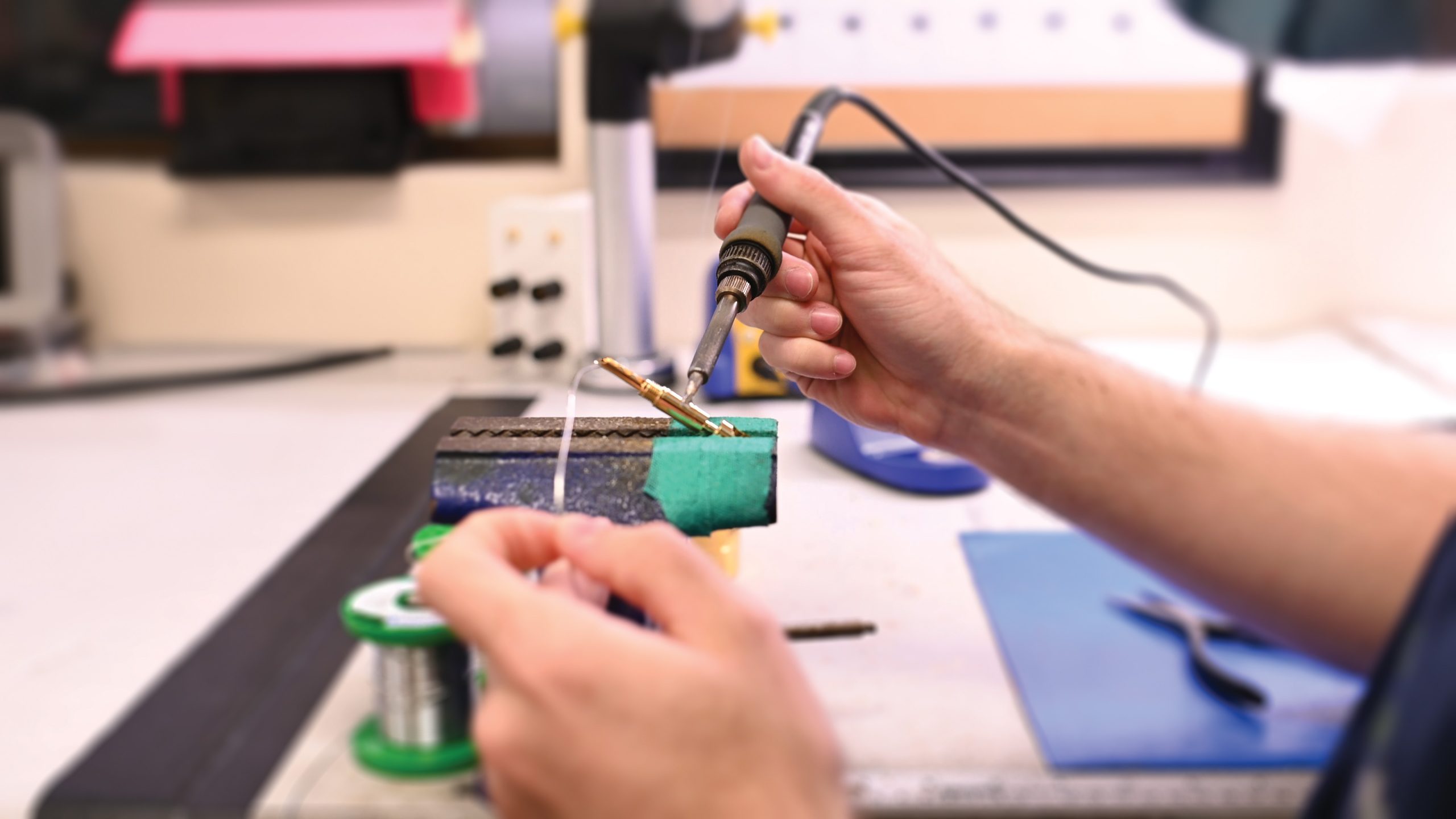
After years of experimenting with different cables in different applications, the team collaborated with Music Interface Technologies in 1986 to look for approaches to control cable electrical characteristics that would provide more predictable musical results from component to component.
The founders, as musicians and music experts, wanted to push cable technology further — even closer to the music than what was previously achieved, and Transparent Audio, as we know it today, began in 1993. To accommodate our expanding needs, we designed and built a new building in 1998 in nearby Saco that would help our growing business and team flourish.

By producing linking solutions that met the performance and quality demands of all types of high-end audio systems from all over the world and backing our products with unparalleled service and customer support, Transparent became an industry leader.
In a journey that has already spanned over four decades, our team continues to innovate and introduce improved designs that further what is possible in audio reproduction.
Were there any inspirations or people who made, or still make, a strong impact on you?
I assume you are talking about people with whom I have had interactions within the high-end audio industry. William Johnson, Ivor Tiefenbrun, Mark Levinson, and Saul Marantz were already success stories when I entered the industry in 1980. They made great products and had strong companies with admirable distribution. They were models to be followed.
Peter McGrath, originally owner of Sound Components in Miami, now a brand ambassador for Wilson Audio Specialties, was one of our first dealers. He was an early proponent of creating sound systems that would most faithfully reproduce source material of live music performances that he recorded. How could one question those results? This recorded source perspective shaped the basis upon which we still evaluate design improvements at Transparent Audio.
Mike Kakadelis, founder of Lyric in New York City, introduced me to the high-end audio press and opened more than a few doors for our entry into the industry. Lyric was the temple of high-end audio in the United States at the time. Mike’s passing in 2012 was a great loss to high-end audio.
Ricardo Franassovici, founder of Absolute Sounds in London, is a good friend and has been a valuable partner in our pursuit of establishing a market for Transparent in Europe and beyond.
Yasuo Nakanichi, noted for establishing many US and European-made, high-end audio components in Japan through RF Enterprises and Stellavox International, helped us with expanding our reach in Asia. He built the legacy for US and European products in Japan against the headwinds of the Japanese electronics boom, and it continues to thrive today, nearly a quarter of a century since his passing.
David Wilson, founder of Wilson Audio Specialties, inspired me with his command of all types of technology, his love of music and recording, and, most of all, with his deep sense of fairness and his desire to spread good will.
My partners, Jack Sumner and Carl Smith, inspired me by encouraging and challenging me to forge ahead when the path forward seemed insurmountable. They bet on me, and I was not about to let them down.
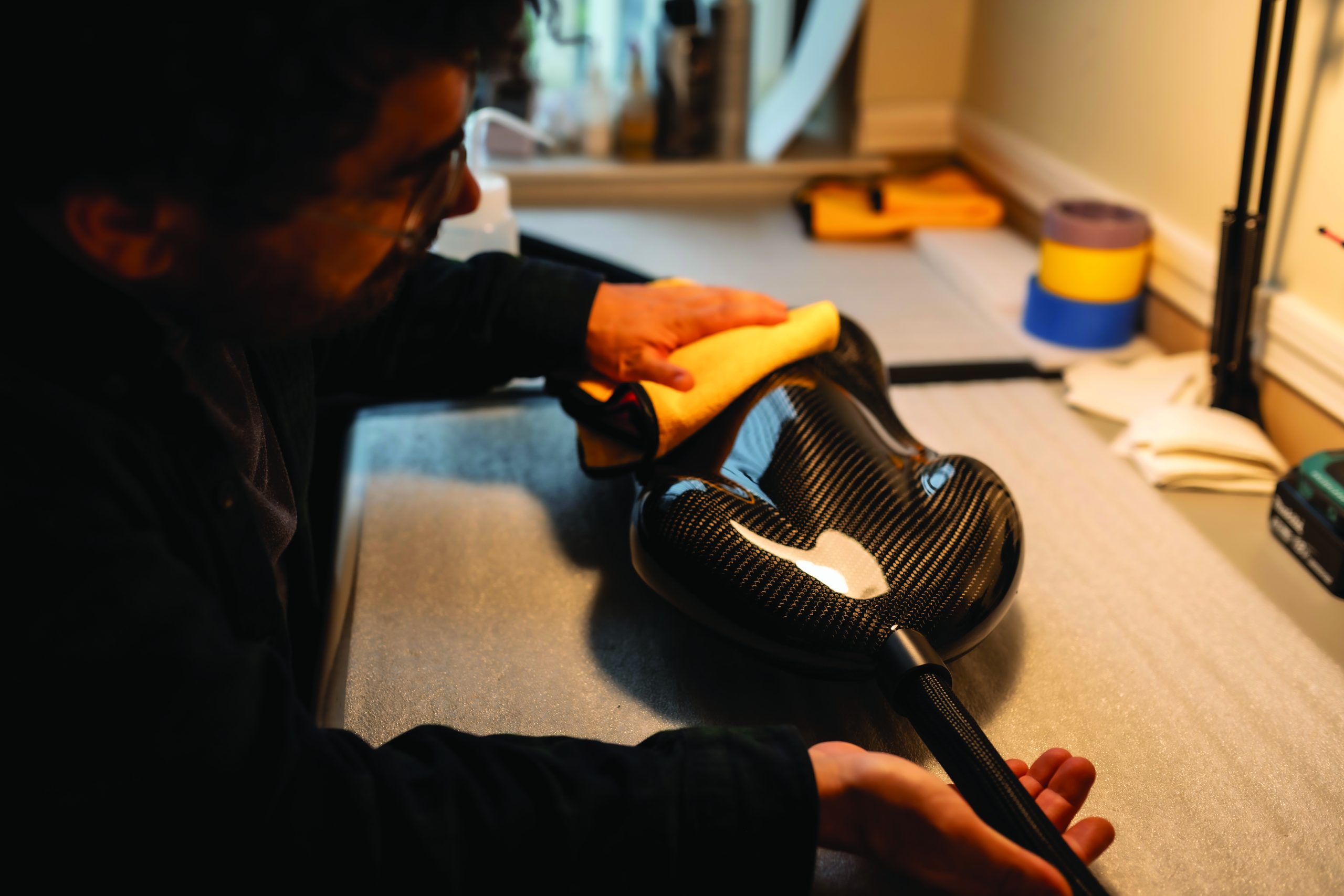
Our staff, which has changed and grown over the years, never ceases to amaze me with their spirit, creativity, and hard work.
By naming names, I apologize to the many unnamed who no doubt deserve credit for their inspiration, some because of what they shared with me intentionally and others by their very presence in our circle.
Nature, music, art, architecture, and well-designed, thoughtfully crafted objects are endless sources of inspiration to me.
You’re known as a music aficionado, but do you consider yourself an audiophile?
I consider myself first a music lover and, secondarily, an audiophile. From my early teens, I wanted to be able to hear music reproduced at home with a believable level of musical realism. I wasn’t just looking for something that sounded good. I wanted my stereo to come as close as possible to the sound of live music.

It started with my first audio system that my dad and I built. I played piano and guitar, and I begged my dad to get our family a good hi fi system. We started by building an integrated amplifier with a phono stage from Heath Kit. As a civil engineer, he knew about resonance, and he designed a handsome pair of speakers that looked like end tables to go on either side of our living room sofa. The speakers had double-wall construction filled with sand, and the inner cabinet had lots of bracing. Dad bought the drivers and crossover parts from RadioShack, which was at the time, an audiophile’s dream store. He built a suspension base for their best turntable/tonearm combination. I was fascinated with every aspect of the design and construction of every part of the system.
The system was my best friend going through high school, and I spent hours listening to different types of music and picking out arrangements of some of my favorites on my guitar — Joan Baez, Judy Collins; Peter, Paul, and Mary; blues from Muddy Waters and Charlie Musselwhite, torch songs from Frank Sinatra and Barbara Streisand, and some British Invasion ballads.
The amplifier was in a cabinet in the living room, and I listened for so long the amp overheated and blew up numerous times. I took the tubes to the local hardware store, tested them, replaced the bad ones, and I was off and running again.
I had an ongoing concern that our tonearm stylus wasn’t capturing all the information from my records. The salespeople at RadioShack thought that my diamond stylus was the best at the time, but I was not satisfied.
We used lamp cord to hook up the system. I can only imagine how much closer to the music I could have been if I could have hooked the system up with Transparent!
I wanted the holy grail of musical realism in a hi fi system at the age of 14, and there began my lifelong search with technology and art to find new ways to glean all the information one could possibly extract from a reproduced music source.
Why the name “Transparent Audio”?
We chose the name “Transparent Audio” to embody our mission of revealing all the information we can from the source as fully and faithfully as possible. Throughout the entirety of our product line, it remains our commitment to reproduce all the information possible from the original recorded material.

Cabling is the longest part of the signal path, which means it can do the most damage to the overall sound. Keeping audio as “transparent” as possible means not introducing any new information or hiding any information from the source.
In our next issue, look for Part 2 of this interview to find out more about Transparent Cables and power conditioning.