Hana cartridges have become one of the most prominent high-end audio cartridge manufacturers, especially by offering an impressive price-to-performance ratio. I have reviewed various types of these unique Japanese micro music machines, but I was particularly excited and positively surprised by the introduction of their flagship, the Hana Umami Black, after already evaluating the Umami Blue and Umami Red cartridges.
Refining technology and delivering uncompromising reproduction across the entire cartridge portfolio is already an achievement. However, offering something extraordinary at a higher price point, where competition is intense, is not only a challenge but also a quest for uniqueness.
As noted throughout the review, the Umami Black builds on the substantial heritage Hana has established. It delivers an impactful performance that sets it apart, offering something truly distinct and, most importantly, a musically engaging experience that matters – not merely for the sake of being different, but by standing out with analog novelty.
UMAMI BLACK
The HANA Umami Black continues the company’s pursuit of what it calls a “Brilliant and Gorgeous” sound, but this latest design goes beyond refinement alone. It represents the culmination of more than five decades of work by master cartridge designer Masao Okada, uniting new materials, innovative engineering solutions, and a notably more ambitious approach than the already respected Umami Red.

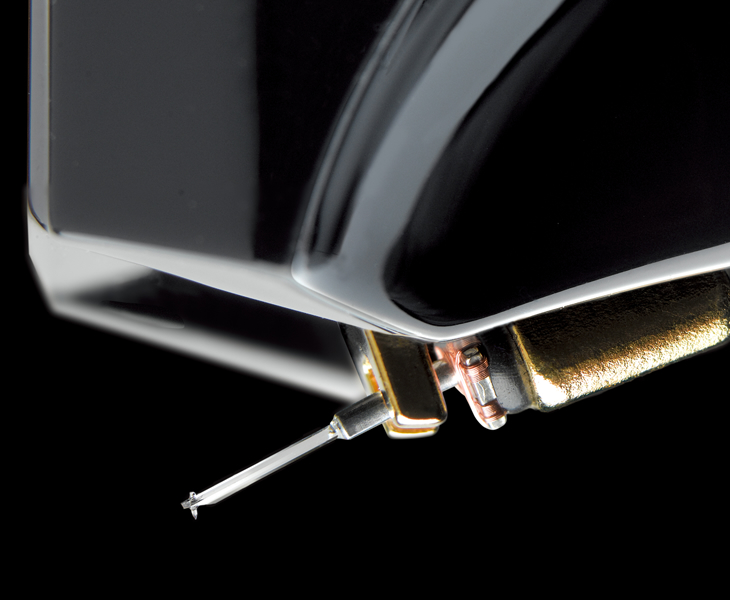
At the heart of the Umami Black is a diamond cantilever – a first for HANA and a decisive advancement in the cartridge’s mechanical integrity. Diamond is unmatched for rigidity and signal transmission, allowing the stylus to respond with exceptional precision while minimizing unwanted energy loss. The result is not only greater detail, but also a stronger sense of focus, stability, and tonal purity.
Equally significant is the introduction of the newly developed OKD high-efficiency moving coil generator. Designed around the world’s first integrated pole piece and rear yoke structure, together with an inverted U-shaped front yoke, the system improves magnetic efficiency and optimizes energy transfer from the cantilever assembly. The engineering is intricate, but its purpose is simple: greater coherence, lower distortion, and a more immediate connection to the music.
The inverted U-shaped front yoke also serves a dual role. In addition to magnetic alignment, it provides mechanical stability and resonance control for the diamond cantilever, contributing to the cartridge’s composed and highly resolved presentation.
Exclusive to the Umami Black is a powerful neodymium-iron-boron rare-earth magnet, selected for its superior magnetic strength and energy conversion capabilities. Combined with the newly developed generator system, it enables the cartridge to react with remarkable speed and dynamic precision.
Further enhancing the cartridge’s responsiveness is a 2 mm square hybrid carbon permalloy armature, formed from a carbon-infused nickel-iron compound and hand-wound with ultra-fine 30-micron 4N high-purity copper wire using Excel Sound’s proprietary winding machinery. The resulting moving coil assembly remains exceptionally light, delivering a 0.3 mV output at 5 ohms with notable control and linearity.
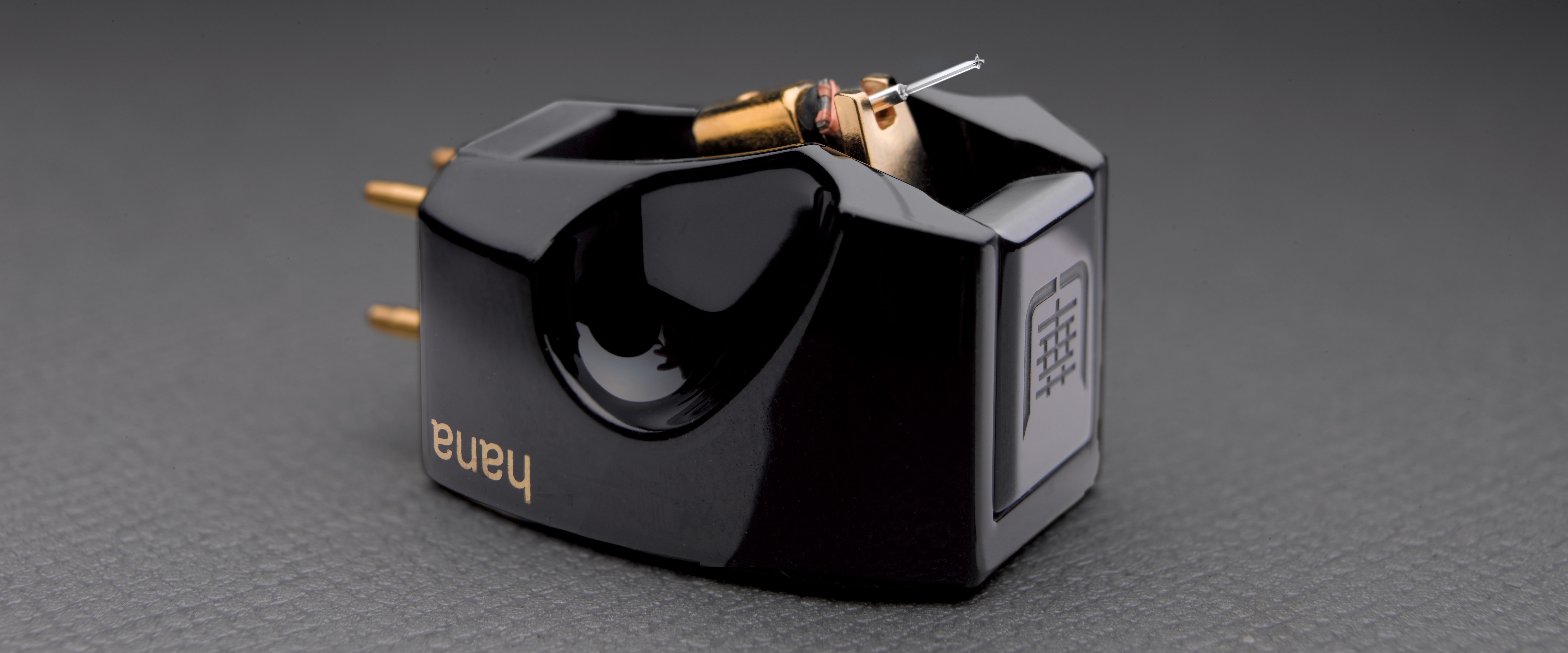
Visually, the Umami Black reflects the same sense of craftsmanship found throughout its construction. Its deep Urushi lacquer finish is applied using a specialized thermosetting process that permanently bonds the coating to the aluminum body through vapor deposition.
THE MUSIC
The Umami Black was evaluated with various reference tracks and albums. As is customary, here are a few selected recordings that highlight the virtues of Hana’s flagship cartridge.
ERC106: David Oistrakh And The London Symphony Orchestra — Horenstein and Hindemith
The Electric Recording Company re-release of the 1962 Decca Record Company recording features David Oistrakh, widely regarded as one of the defining violinists of the twentieth century, presenting deeply refined interpretations of two contrasting compositions, each revealing a different facet of his extraordinary musical authority and interpretive depth.

The Hana Umami Black brings a unique gravity to this recording, immediately distinguishing it from other cartridges. It effortlessly conveys David Oistrakh’s violin tone while maintaining remarkable density and human presence. Many cartridges, even those above the Umami Black price point, tend to romanticize excessively and lose cohesion. Not so with the Japanese flagship. Hana’s top-tier cartridge rendition of Oistrakh and the London Symphony Orchestra under Jascha Horenstein unfolds with a rare sense of balance, allowing Hindemith’s score to expand naturally without unnecessary dramatization.
The Umami Black reproduces the orchestra-violin interaction with greater honesty and tactility, preserving not only the musical structure but also the essential orchestral atmosphere deeply embedded in the performance. It excels with unique textural density and tonal color that emerge from the grooves with convincing orchestral momentum and refreshing physicality.
It is not easy to reveal the necessary string harmonics, tonal overlays, and delicate complexity, yet Umami Black’s layering remained stable and intelligible in both subtle and more demanding passages.
At no point did the Hana Umami Black render Electric Recording Company release too polished or artificially enlarged; instead, it consistently maintained orchestral proportion, impact, and realism.
Regardless of price, some cartridges fail to reveal the understated tension between restraint and expression that defines Oistrakh’s playing. Again, the Umami Black exemplified its concept, transcending the shortcomings of some micro machines and handling dynamics with confidence, flow, and refreshing continuity.
ERC097: Gil Scott-Heron — Pieces Of A Man
Few albums from the early seventies retain the urgency and relevance of Pieces of a Man. Gil Scott-Heron’s approach to composing is an intimate extension of observation and experience, and this record continues to resonate because it remains in sync with the era it reflects.
The Hana Umami Black lets Pieces of a Man stay sparse when necessary, giving space for Scott-Heron’s voice and the weight of the message, creating a smooth blend of soul, jazz, poetry, and social commentary, fluidly woven, producing an aural presentation that never loses its particularly upbeat, densely grooving, and soulful narrative.

What the Umami Black particularly excels at is balancing intimacy, suspense, and a natural sense of timing, supported by subtle instrumental interplay and understated rhythmic movement. The top-tier Hana cartridge does not force dramatic effect; instead, it lets phrasing and silence create a deeper emotional impact.
Tracks such as “Home Is Where the Hatred Is” and “The Revolution Will Not Be Televised” retain their raw immediacy, grounded in unique transparency and clarity, which grant a serene, underlying sense of control to the engaging rhythmic pulses.
From an audiophile perspective, the Umami Black delivers organic tonal balance that rewards careful listening: the piano retains natural, objective physicality, percussion materializes with plausible texture, and Scott-Heron’s human dimension remains intact throughout.
Most importantly, the Hana Umami Black allows the album to convey atmosphere without relying on artificial extravagance, sonic artifacts, or an exaggerated soundstage. This Japanese high-end cartridge remains faithful to artistic honesty – direct, reflective, and profoundly musical.
ERC109: Grateful Dead Europe ’72
Europe ’72 captures the Grateful Dead at a rare point of equilibrium, spontaneity, technical confidence, and collective intuition congregate with unusual immediacy.
Recorded during the band’s extensive European tour, the album avoids the loose fragmentation often associated with live recordings from that era. It presents a group fully aware of its internal chemistry, capable of extending songs far beyond their studio origins while maintaining focused direction.

Umami Black follows the band’s movement throughout the performances, never revealing a mechanical imprint but offering an engaging sense of dimensionality and temporal accuracy, allowing the listener to delve deeper into the musical narrative rather than merely observing or succumbing to the overly analytical sonic dissection often induced by many cartridges.
What continues to distinguish Hana Umami is the fluid presentation of the musicians’ interplay: Jerry Garcia’s guitar lines move with lyrical ease, supported by a rhythm section that knows when to hold back and when to drive forward. The improvisations unfold organically, without abrupt transitions or forced climaxes, allowing the music to develop with patience and confidence. Tracks such as “Brown-Eyed Women,” “Jack Straw,” and the ample “Morning Dew” demonstrate the cartidge ability to balance Americana, folk, blues, and psychedelic exploration within a single, uninterrupted musical language.
Umami Black preserves an openness and live realism that remain highly engaging, indicating the audience’s presence is integrated naturally, never distracting from the performance. Instrumental textures maintain warmth and dimensionality, while extended passages preserve clarity and dynamism even during denser arrangements.
Moreover, Umami Black conveys atmosphere and interactive connection beyond simply documenting the event – something even some of the more expensive cartridges cannot achieve: unpredictability shaped by musical intricacy. The Hana flagship cartridge acts with notable musical differentiation that matters.
THE CONCLUSION
Umami is a very interesting word in the Japanese language and describes a distinct taste that is not typically sweet, sour, salty, or bitter, but roughly translates to a pleasant savory taste or deliciousness.
Umami Black immediately captivates with its delicious charm, drawing the listener into deeper analog depths and revealing insights hidden in the black grooves, while providing a transparent transcription of analog data. It offers a pristine way to comprehend, capture, and ignite the senses in a truly unique manner.
The variety of cartridges on the market is overwhelming at all price points. In recent years, the top end of high-end audio cartridges has become saturated with many types of these niche but highly regarded micro machines.

To stand out, a cartridge must be differentiated from the many similarly priced options. With this product type, there are numerous ways to make them interesting, from exotic materials to different drive motors and more.
What sets the Umami Black apart is its ability to capture and resonate with the harmonicity and natural harmonics of music without interfering or pushing the sound toward any sonic extremes. This is where expertise in proper voicing, understanding of materials, technical implementation, and years of experience are essential.
The latest Hana flagship analog cartridge strikes directly at the emotional core, never faltering during thunderous crescendos, dynamic shifts, delicate movements, gentle passages, or sudden shifts in dynamics.
Umami Black’s mechanical precision allows music to unfold and track at any point, ardently following tempo changes and creating the essential mystique of analog charm. That alone sets it apart from the competition, and I appreciated how it exceeded usual expectations.
There are many renowned cartridges from Japan and around the world, produced by various manufacturers, that are interesting and offer different types of engagement. However, at its price, the Hana flagship provides a unique balance that creates a true connection from recording to listener, delivering an enticement that is difficult to achieve and rarely found, regardless of price. This is where the magic happens, and this is what analog connoisseurs and aficionados typically seek: value above all else.
We live in an era where technical achievements are relatively easy to attain thanks to advanced technologies. What is much more challenging is creating something that resolves speed, transparency, dynamism, and the full scope of musical momentum, while also forging an interactive bond with the listener. Many of these qualities can be recognized and enhanced by high-end audio cartridges, but seamlessly combining them and integrating all technological approaches into the refined fluidity of the Hana Umami Black is an art in itself. Here, deliberate design choices are meaningful, resulting in a sonic culmination that truly speaks the language of music.

At this level of cartridge manufacturing, there are no quick solutions to complex problems, and relying on trial and error is too daunting. What works is a highly efficient design that maximizes energy efficiency, minimizes material usage, and distills complex structures into an optimized product. This is exactly what the Hana Umami Black cartridge intimately reflects.
I could not give a better remark or recognition than this, and that is why I am happily awarding the Hana Umami Black cartridge the 2026 Mono and Stereo Editor’s Choice Product Award.

The Hana Umami Black is not the most expensive cartridge, yet despite its considerable price, it reflects quality in every aspect, offering more substance and sonic credibility than its price suggests.
Umami Black’s harmonically rich core is exquisitely balanced, seamlessly voiced with the golden triangle of timbre, tone, and color, and, thanks to its elevated potency, can at any moment not only radiate but also faithfully convey and resonate with the very essence of music.•

PRICE
€ 11.200,00
TECHNICAL
Coil Impedance: 5Ω
Output Voltage: 0.3mV
Load Impedance: ≥50Ω
Frequency Response: 15-50,000Hz
Output Balance: 0.5dB/1KHz
Channel Separation: 30dB/1KHz
Tracking Weight: 2g
Trackability: 70μm/2g
Dynamic Compliance: 0 x 10-6 cm/dyne (100Hz) Estimated at 17 x 10-6 cm/dyne at 10Hz
Cartridge Weight: 11.3g
CONTACT
Youtek Limited 17-6
Higashi Kishi Urawa
Saitama Japan 330-0054
Mobile +81 80-1062-3126
FAX: +81 48-811-1779
Mail: ishihara@pc4.so-net.ne.jp
Website: www.youtek.jp