Tadayoshi Okuda, an engineer involved in technology development at Technics, introducesthe first installment of the Chief Engineer Column, focusing on the “platter” used in Technics turntables.
Okuda has a deep passion for music, audio, and craftsmanship. In this Behind the Sound column, he will share the stories behind Technics technology development – insights, design philosophies, dedication, and untold episodes that go beyond what can be conveyed in a catalog – presented as clearly as possible.
◾High Sound Quality Enabled by a Multi-layer Structure
The SL-1200GME features a three-layer platter structure: brass and die-cast aluminum are firmly integrated, with a full-surface rubber layer applied to the underside.
This design is based on the principle that the rigidity of the base supporting the record has a direct impact on sound quality.
During development, we set the renowned SP-10MK2 as our benchmark, striving to enhance both weight and rotational performance.
As a result, we achieved a platter weighing approximately 3.6 kg, enabling smoother and more stable rotation through increased moment of inertia.
Today, the platter is also securely fastened to the motor with three screws, ensuring efficient transmission of motor torque without loss.
◾Precision Balance Adjustment for Each Unit
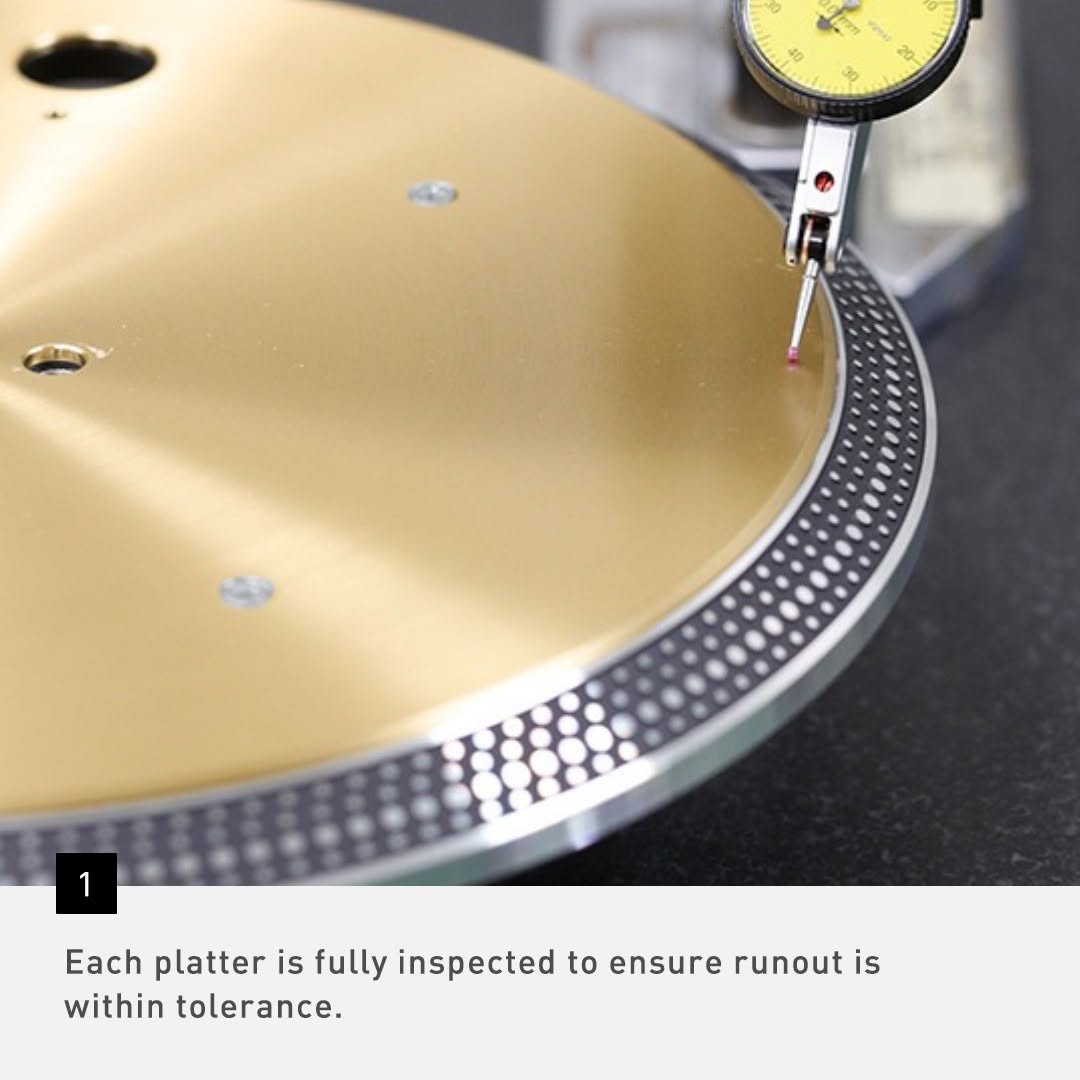
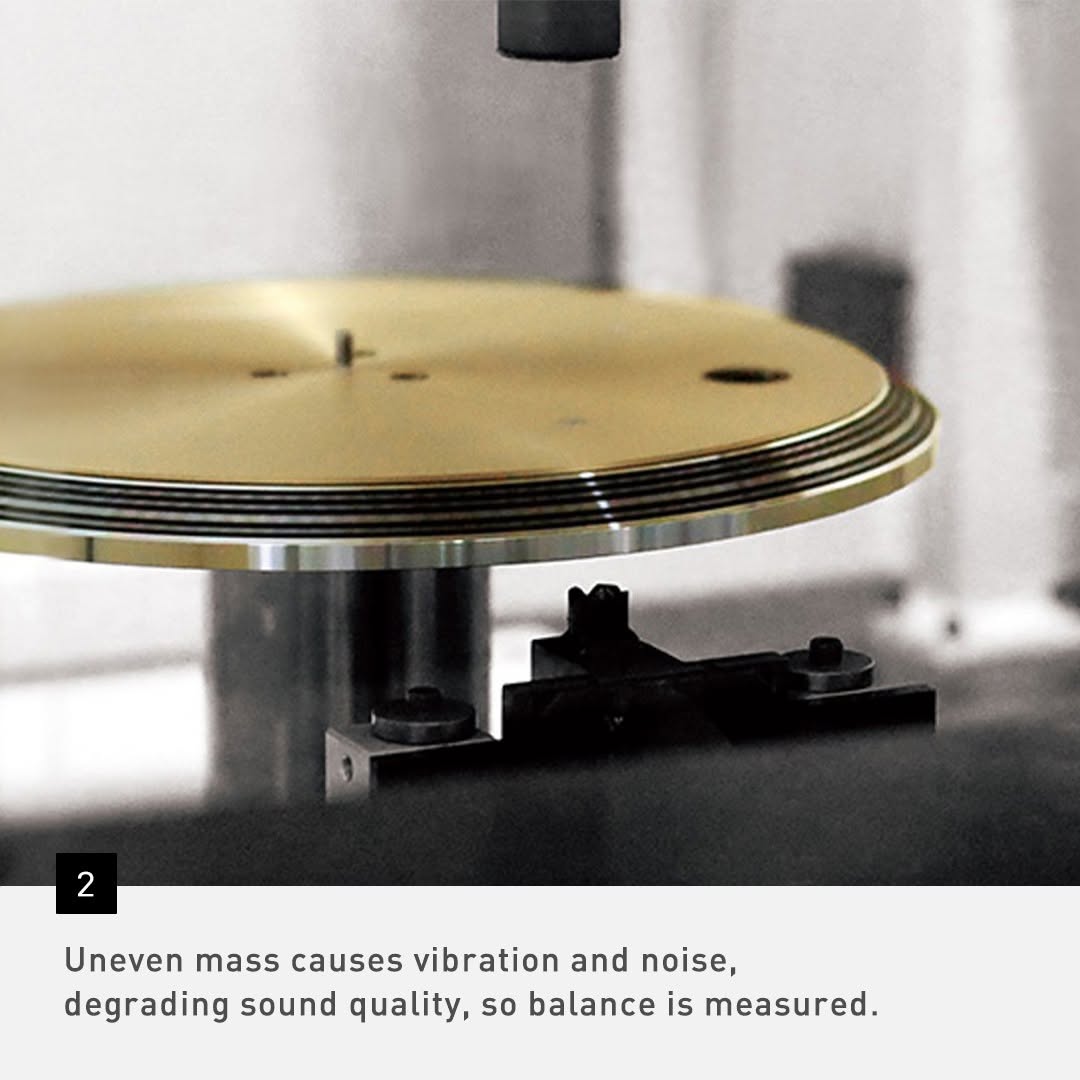
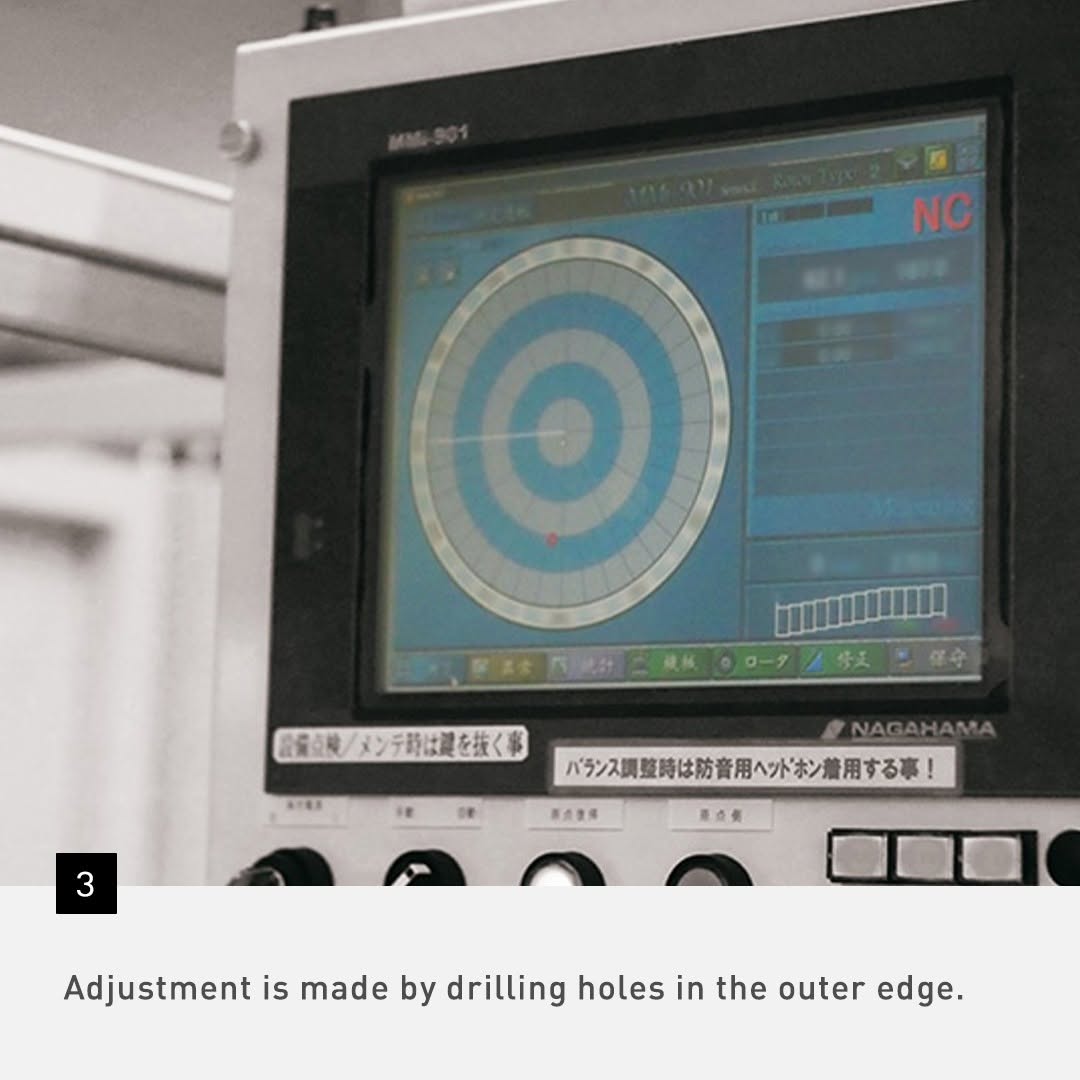
Even the slightest mass imbalance can affect sound quality. To address this, we use specially customized balancing machines—similar to those used in manufacturing Shinkansen wheels—to fine-tune each platter individually. (see Fig. 1,2,3)
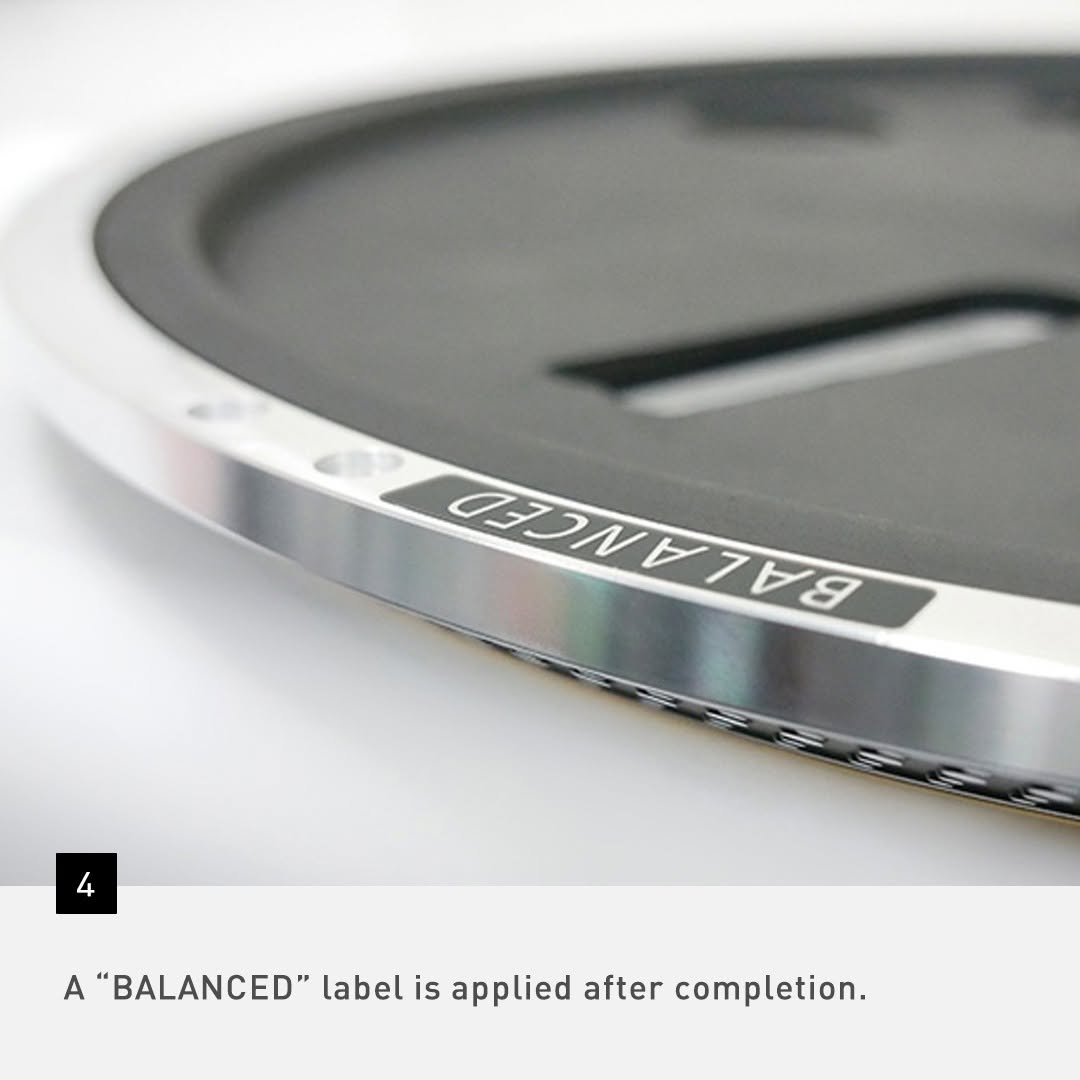
Each unit undergoes meticulous rotational balance adjustment, and a “BALANCED” sticker is applied as proof of completion. (see Fig. 4) (Applicable models: SL-1000R / SL-1200GME / SL-1300G).
◾Exclusive Specifications for Flagship Models
For the SP-10R / SL-1000R, a high-density tungsten weight is embedded around the outer perimeter, in addition to the three-layer structure of 10 mm thick brass, die-cast aluminum, and special high-damping rubber. This results in a total weight of 7.9 kg and an extremely high moment of inertia, delivering outstanding rotational stability.
photos & info courtesy of Technics