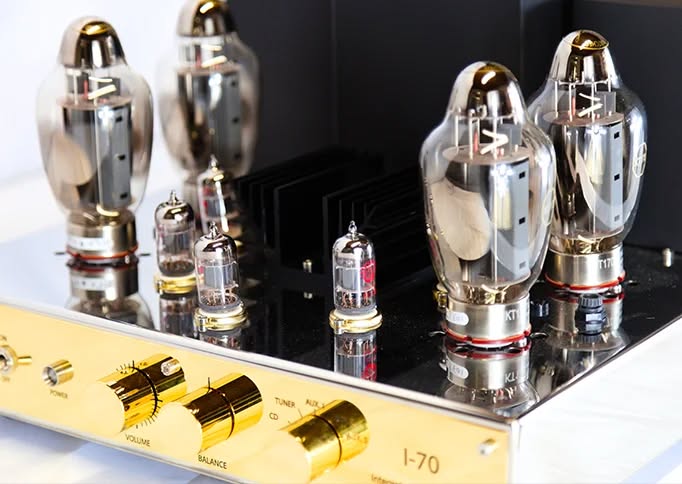
Why does a tube amplifier naturally generate heat? And when should it become a cause for concern?
Heat is an inherent part of tube amplification, particularly in pure Class A designs. But understanding what happens inside your amplifier helps distinguish normal operating temperatures from signs that deserve closer attention.
Where does the heat come from?
- An amplifier uses electrical energy to increase the power of the musical signal. Part of this energy is delivered to the loudspeakers, while the remainder is mainly dissipated as heat.
- Several components contribute to this heat at the same time:
- the filaments that heat the tube cathodes;
- the internal electrodes that dissipate power during operation;
- resistors and power-supply components;
- the mains transformer;
- the output transformers;
- the chassis, which receives and dissipates some of the heat.
- The final operating temperature depends on the number and type of tubes, the circuit architecture, power consumption, duration of use, room temperature and airflow around the amplifier.
- There is no single external temperature that can be used to declare every amplifier either “normal” or “too hot”. The most useful reference is the amplifier’s usual behaviour when it is installed in accordance with the manufacturer’s recommendations.