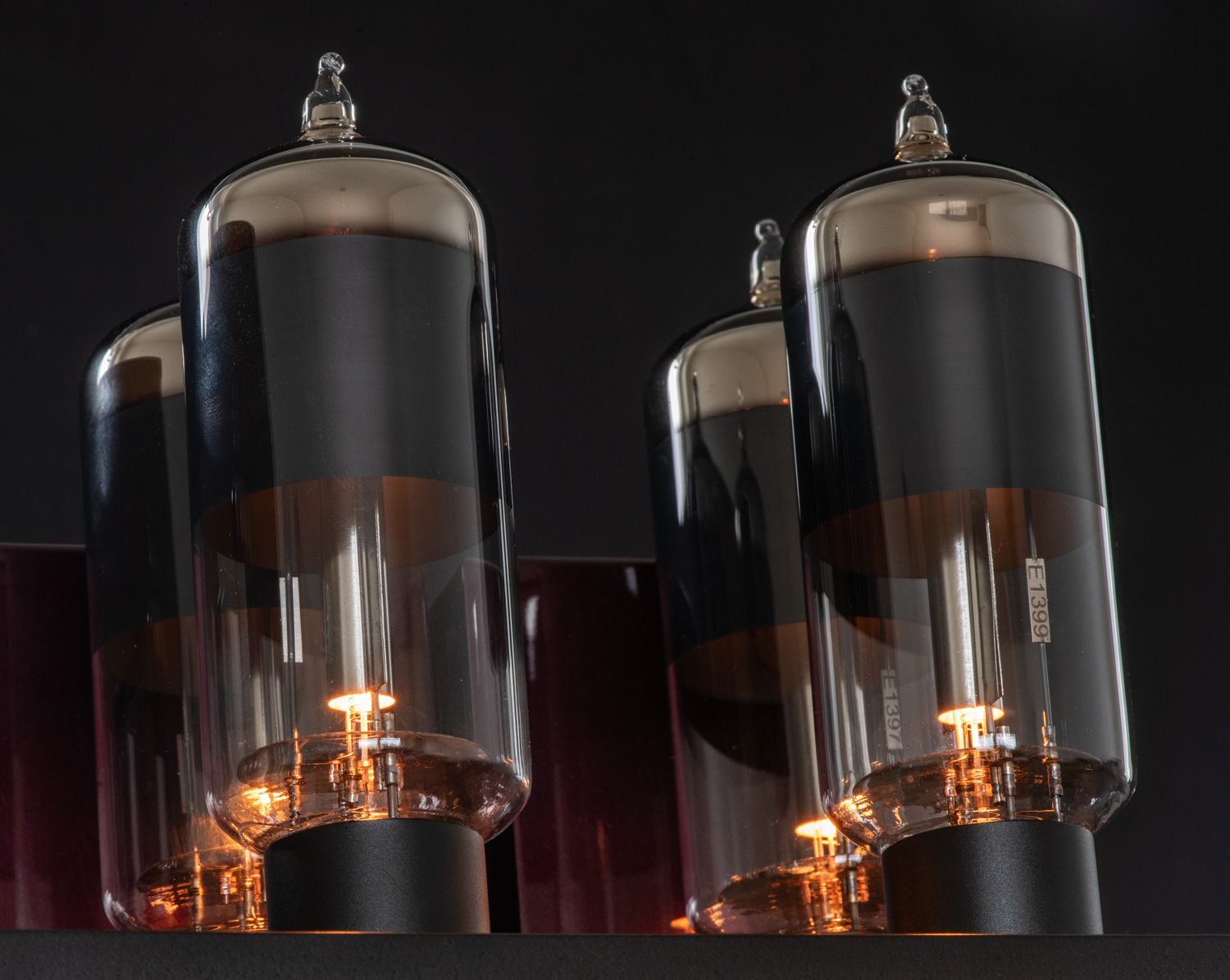
When Mayer wanted to try out new approaches to electron tubes, we were always limited by the fact that we had to adapt the parameters of existing tube types. This time we did it differently. How about we prioritize the new structure we want to try and see what parameters the resulting tube has? If it doesn’t match an existing type, why don’t we build the amplifier to fit?

If you look at some old tubes, they sometimes have a cylindrical arrangement of cathode, grid and plate. More modern tubes have moved away from that structure. But sonically, the cylindrical arrangement was always better when I compared tubes of the same type with round plates to those with a box-shaped electrode arrangement.
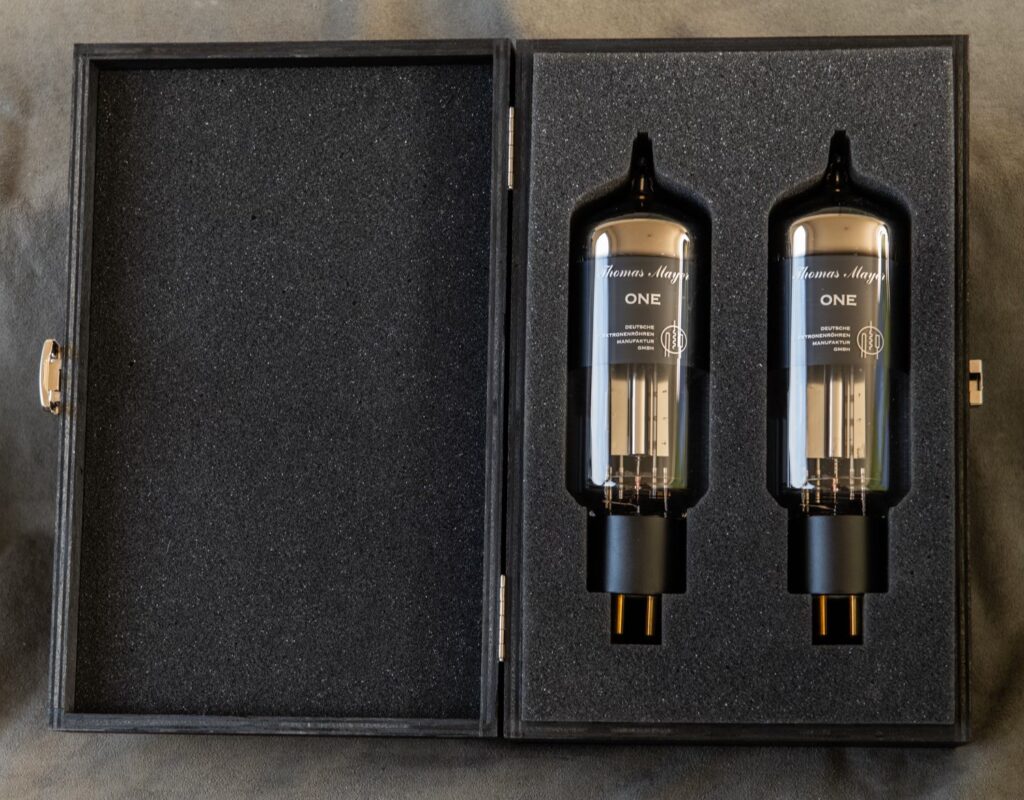
During initial experiments in the tube factory, this tube was developed, which has a single filament string in the center and a cylindrically wound grid around it, which is located in a cylindrical plate. In this way, the geometry inside the tube is always the same, no matter in which direction you look from the filament to the plate.
Measurements confirmed the superiority of this arrangement with very linear plate curves, which is also reflected in the sound. Thus our new tube was born, the ONE.